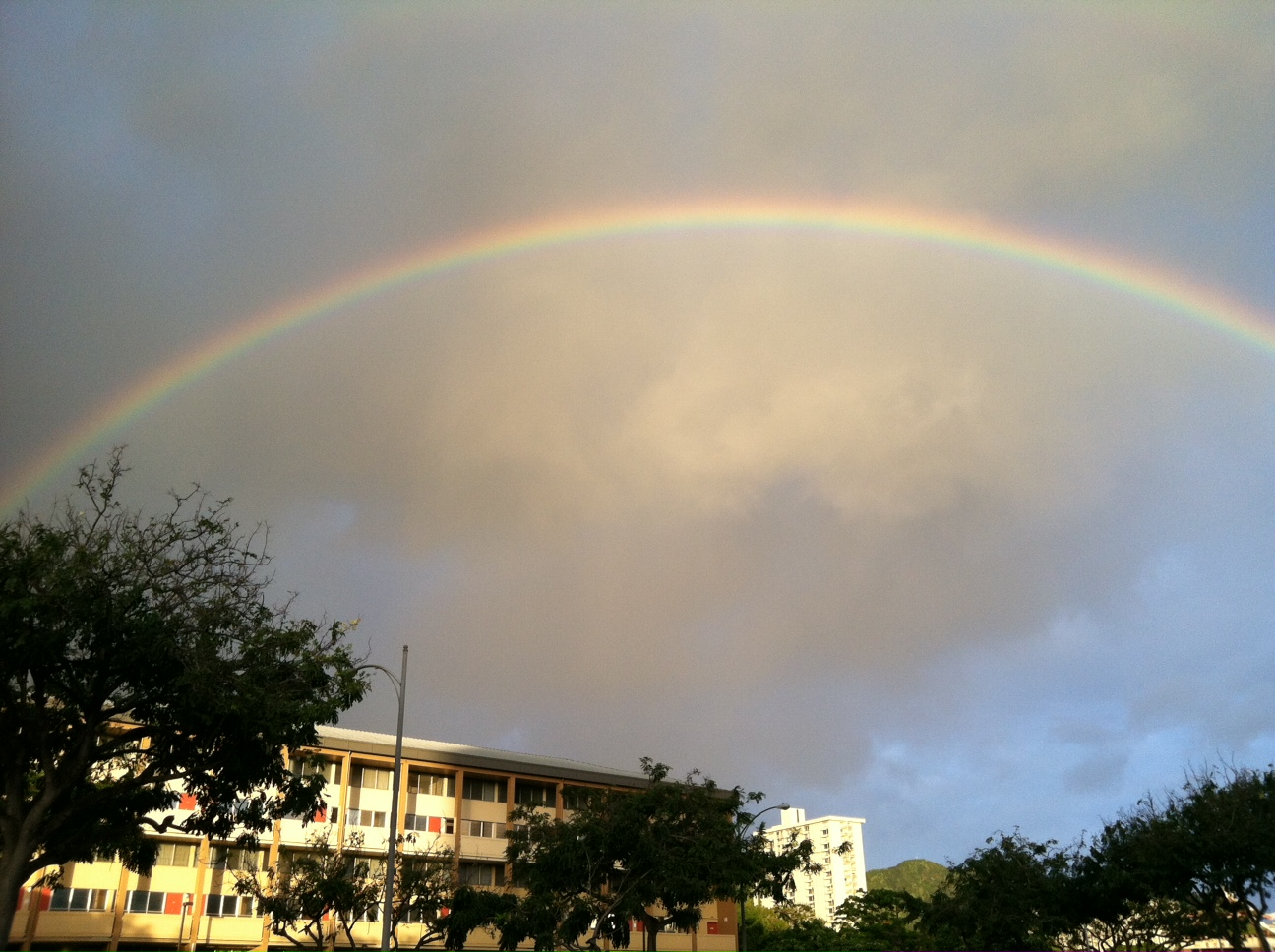
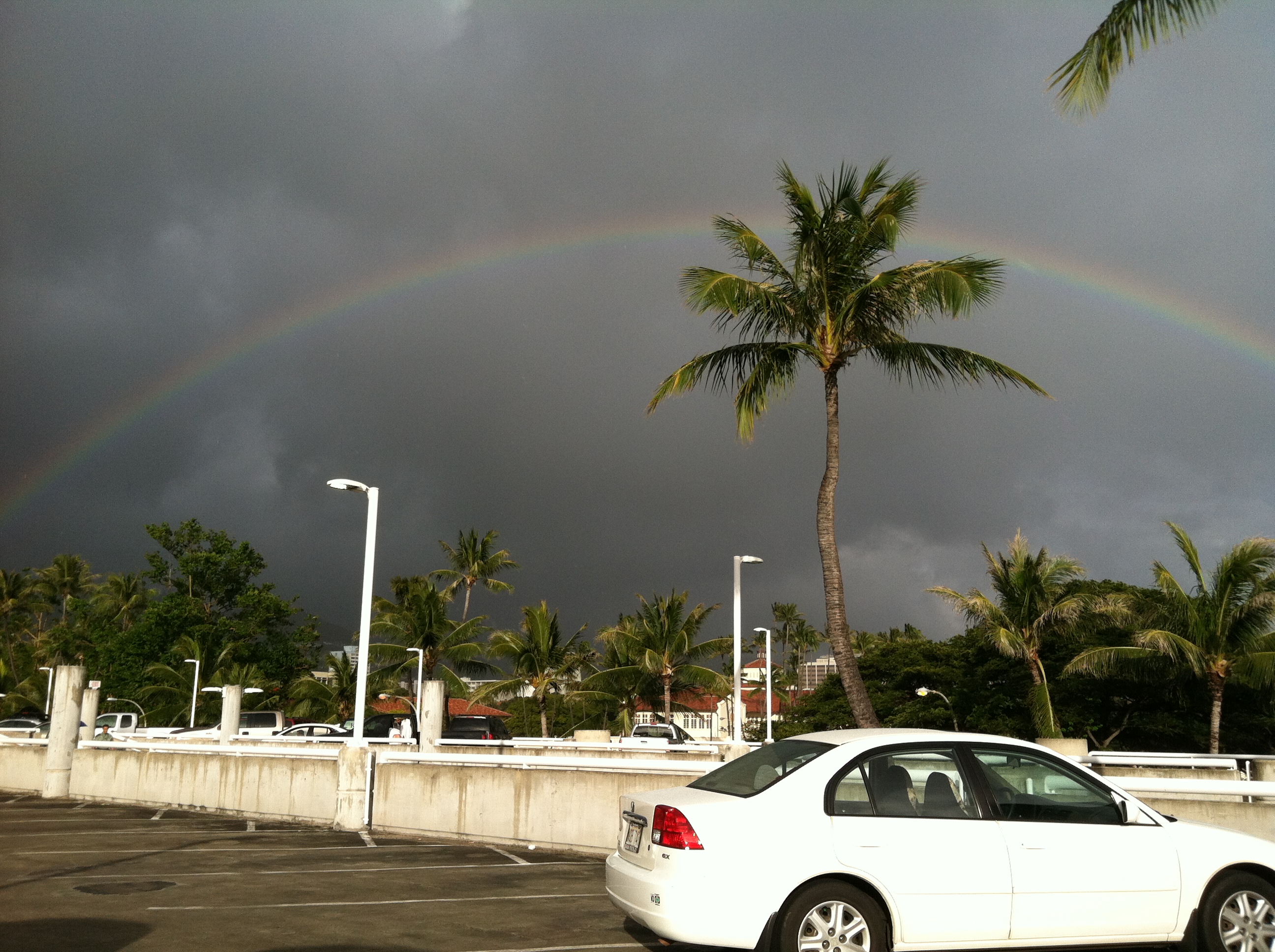
Among the wonderful blessing of simply living in Hawaii is that there are a lot of rainbows. It gives me even more joy that there is a special blessing in Hebrew just for the rainbow. I love it that I get to combine the two on a regular basis.
I have gotten into the habit of snapping a photo of them with my iPhone. Here are few of my recent favorites.
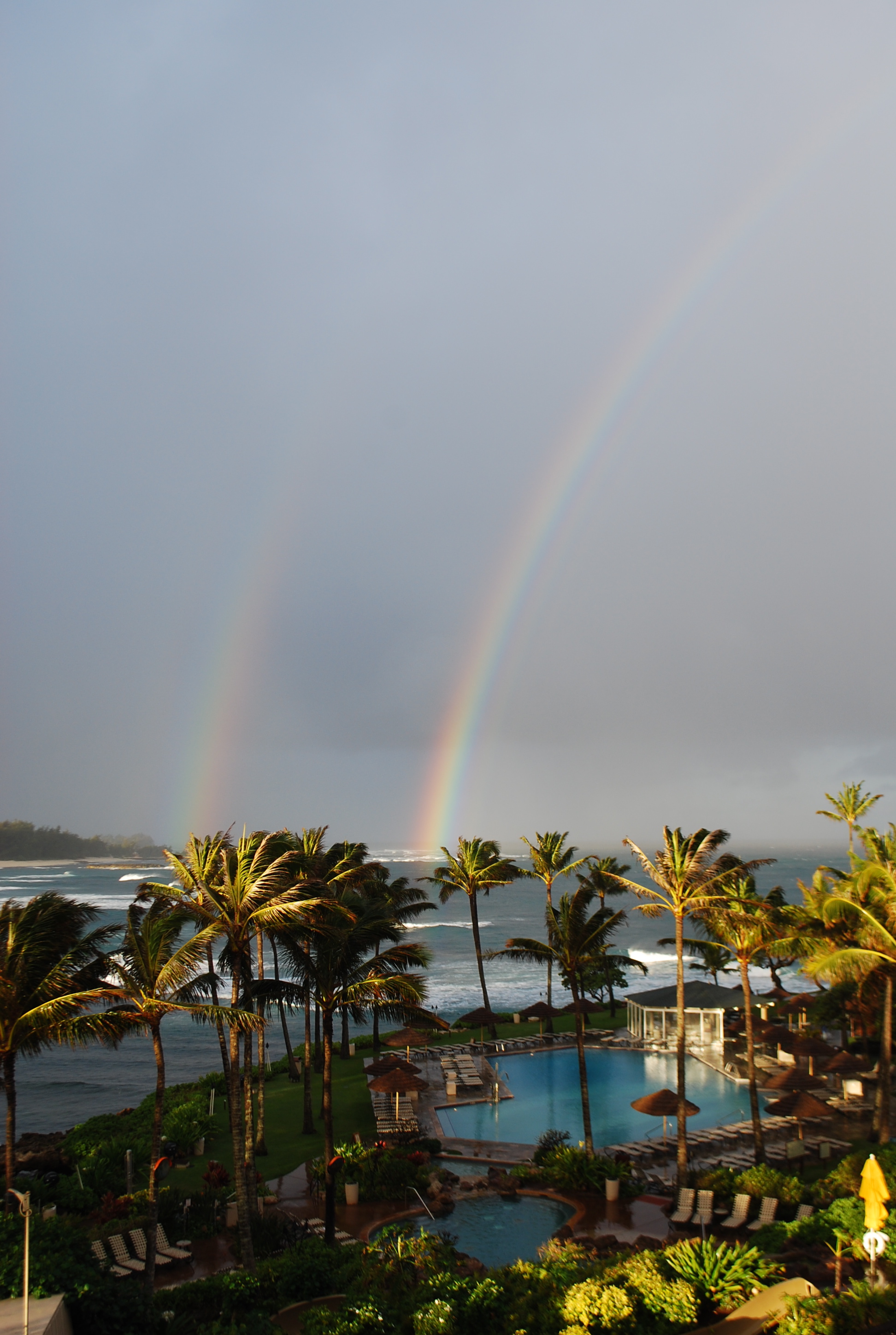
This is the double rainbow I saw outside our hotel room window in December when we were at Turtle Bay Resort celebrating our fourth wedding anniversary.
I can’t help but count in my blessings the opportunity to count these blessings every day.
When I heard about the concept of Aloha Friday soon after I moved to Hawaii over twenty years ago I said to myself, “You gotta love a place that has a special name for the end of the work week and the beginning of the weekend.”
I was even more enamored of my new home when I hear Kimo Kahoano’s song, that celebrates the idea of “No work ’til Monday.”
It wasn’t until recently that I made a connection between Aloha Friday and Shabbat. No wonder I had such an immediate affinity for the concept. It fits right in with my Jewish upbringing for Friday to be the beginning of a time for rest.
Local people in Hawaii wear Aloha attire to work on Friday. Jews dress up and often wear white to celebrate Shabbat. Hawaiian food is often on the menu for Aloha Friday. We come together for a special meal on Friday for Erev Shabbat. I have found a way to manage to do both: Hawaiian food for Shabbat dinner. Why not?
Tonight we had an Aloha Friday Shabbat meal. I bought lau lau and poke at Costco.
I made rice and we had a few other things on the side. I skipped the lomi salmon due to the ironic fact that I don’t like salmon in any shape or form-massaged, steamed, smoked or raw.
We lit the Shabbat candles, said the kiddush and a motzi and ate our dinner.
Shabbat Shalom and Happy Aloha Friday—no work ’til Monday.
Because Good Friday and the first night of Passover fall on the same date.
It has always been a complaint of mine that Good Friday is a state holiday in Hawaii. It seems odd to me.
When I taught at Wai’anae High School as an employee of the Hawaii State Department of Education I did not complain. I was always willing to take a day off, even if it isn’t my holiday.
When I enrolled my kids in a private school that promotes itself as non-sectarian and that administration continued to schedule Good Friday as a school holiday year after year, I began to get a bit ferkrimpt (that’s Yiddish for annoyed).
A few years ago somebody told me that the legislature has it off to prepare for Easter. Huh? Prepare? What do they have to do? Could they possibly be spending an entire day dying eggs in pretty colors? or putting together baskets of candy? or do they have to catch up on their sleep so they can make it to an Easter sunrise service a few days later?
Forgive me if this sounds sacrilegious, but from my perspective there is not a lot of formal observance of Good Friday. Easter Sunday is already a non work day and most of the people I know are pretty pagan about their rituals.
Which brings me to my next point. Good Friday and the first night of Passover are on the same date this year–today. Yet few in this wonderful state of aloha have the slightest notion that Jews in the islands, and around the world, are preparing for one of most important holidays in our heritage.
Why can’t it be a state holiday for us too? We actually have a lot of preparing to do.
Admittedly, some things have changed since I moved to Hawaii over 20 years ago. Local grocery stores such as Safeway and Times Market carry traditional Passover foods such as Matzah and gefiltah fish, even in Kapolei.
I no longer have to order it months in advance at Temple Emanu-El to have it shipped in for us.
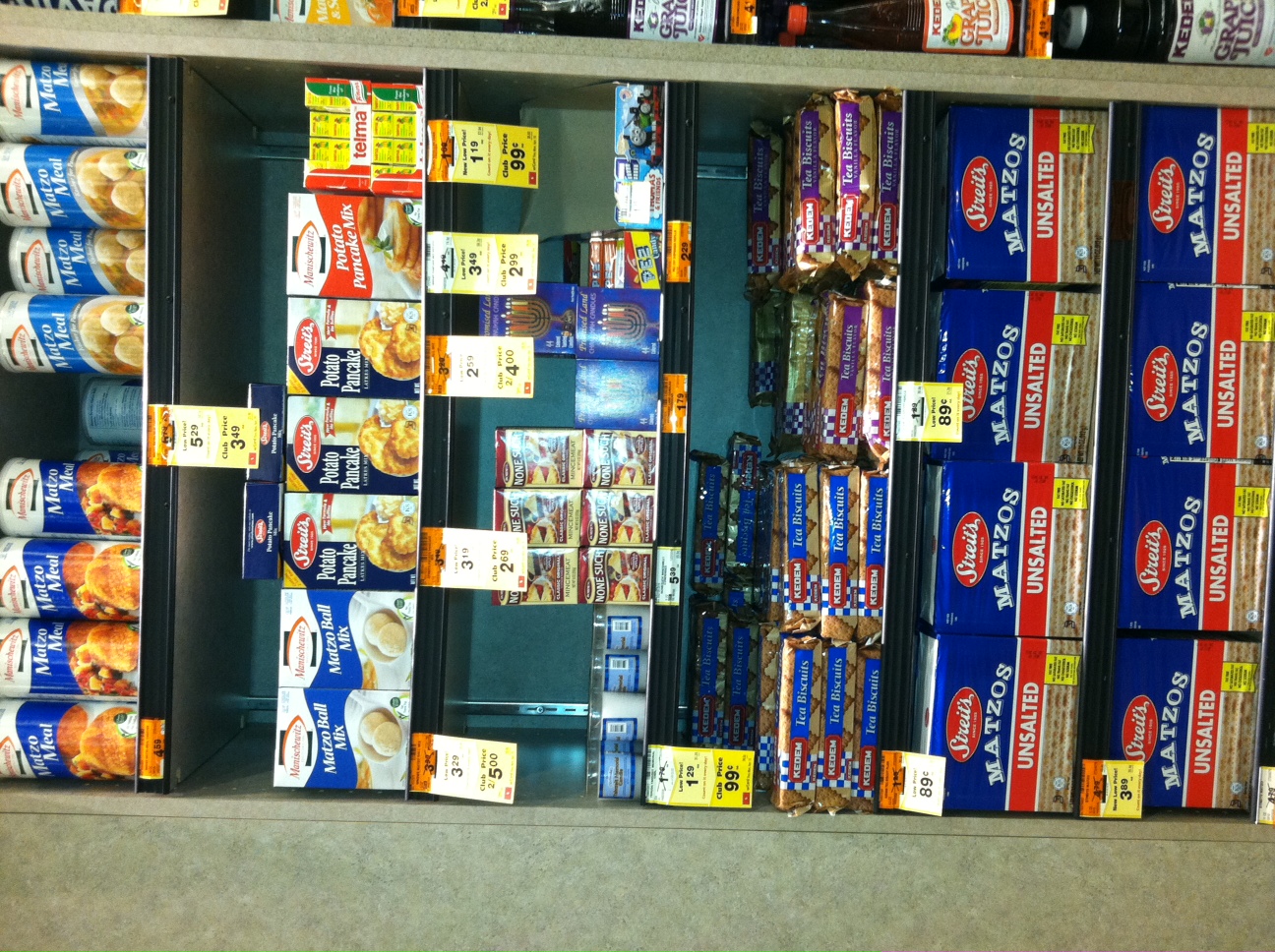
When I went to Kapolei Safeway the other day to purchase matzah I was pleasantly surprised. They have come a long way.
Of course the Easter merchandise bombards you as soon as you walk in the door and I did have to walk around a bit before I could find the Jewish food section. But it was there. And it was decently stocked. Just as are we Jews on the island of Oahu.
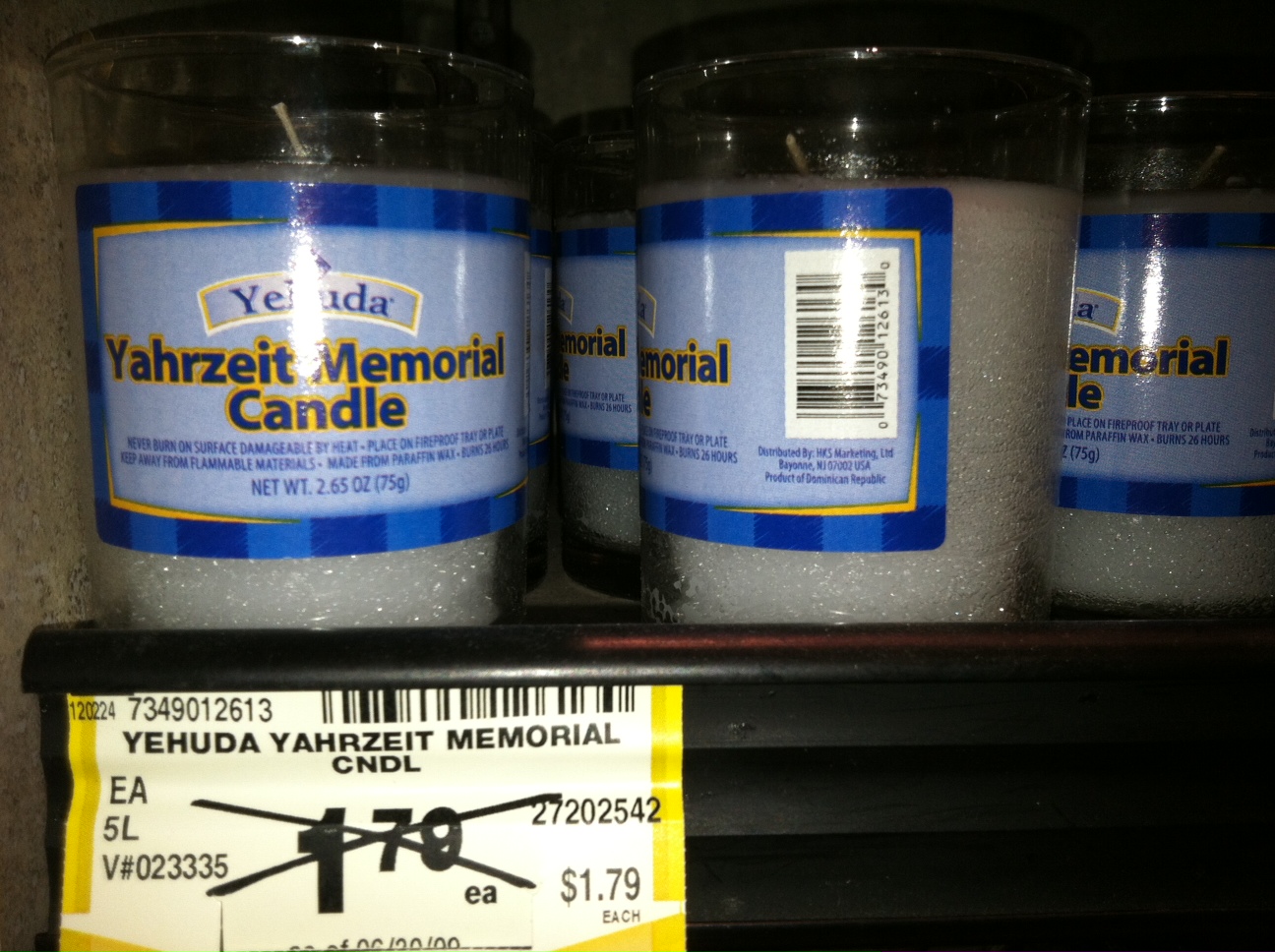
They are set up for Jews all year round which is kind of nice since we are not just seasonal residents. I noticed that they sell Yahrzeit candles which means I don’t have to order them on eBay from now on.
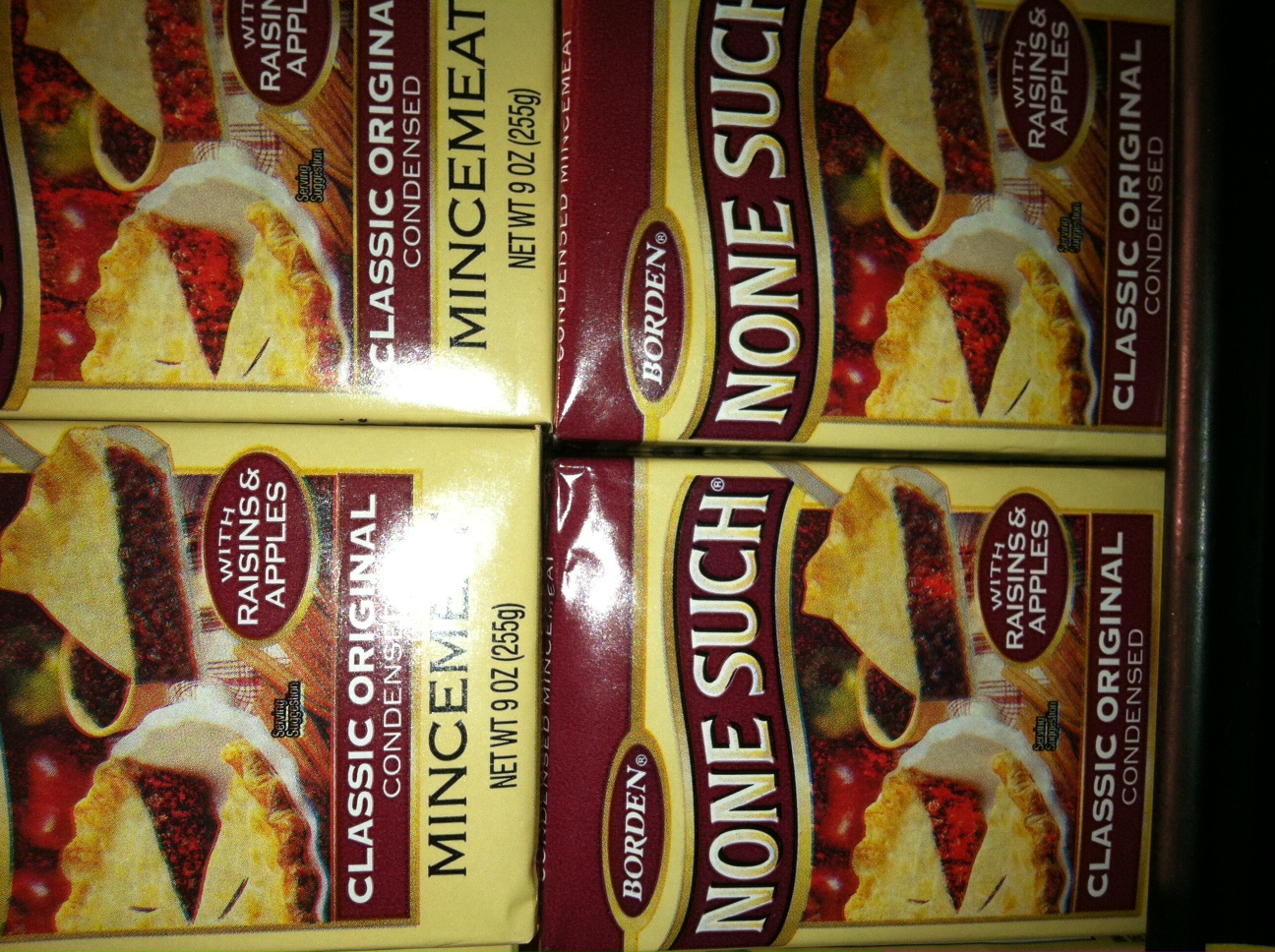
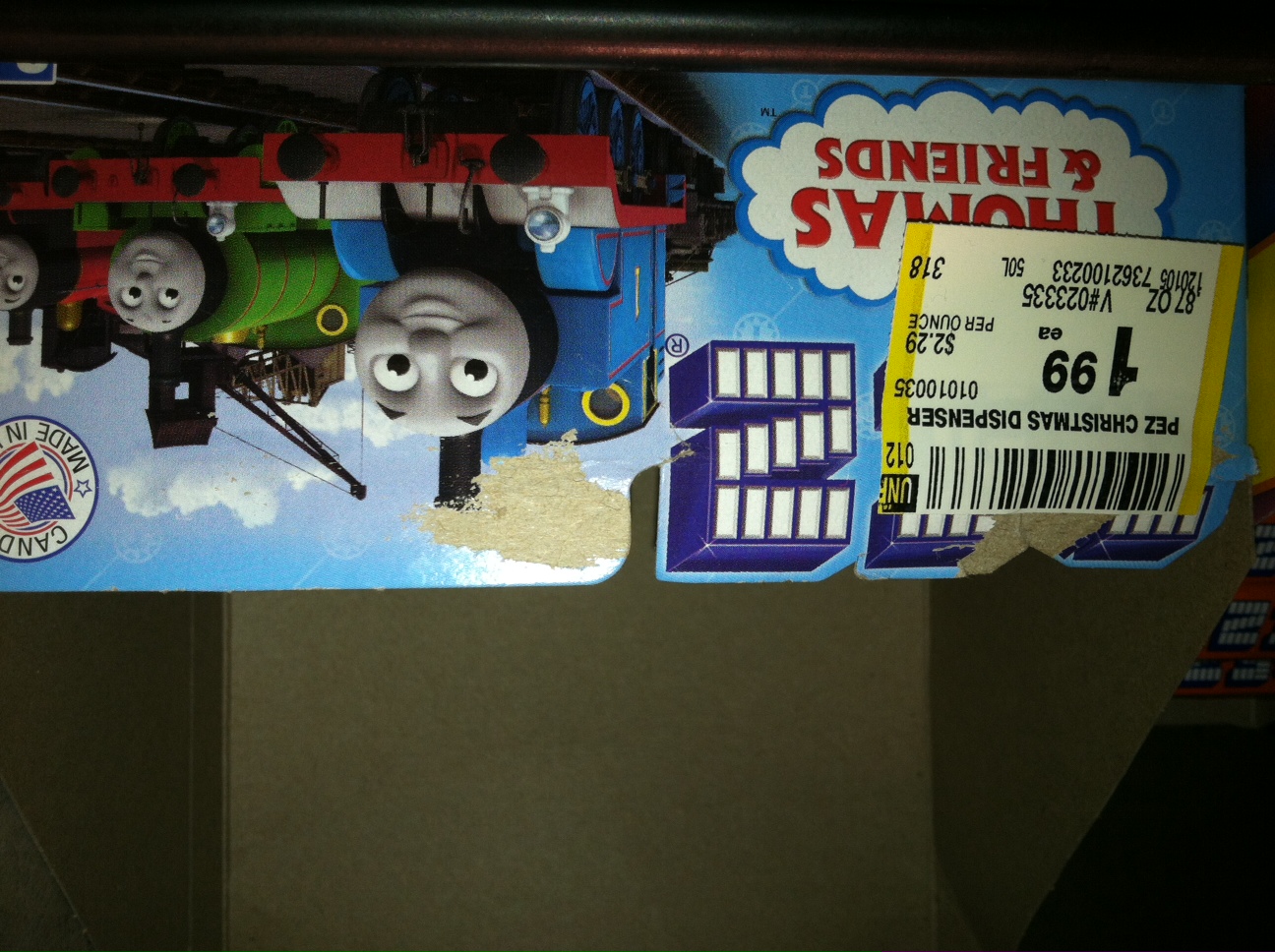
I can’t quite figure out why they have included mince meat and Thomas the Tank Pez in this section. If anybody has any insight into this choice, please let me know. But I have decided not to complain, it seems fairly harmless.
I’ve been enjoying all of the Facebook posts from friends and family near and far about their Passover preparation. The brisket is cooking at my sister’s house. A local Jewish woman is looking for fresh horseradish and another woman in Honolulu posted that her house smells like Passover–yum.
It makes me feel like a part of a larger Jewish community.
What many people don’t realize, is that it takes days to prepare a Passover seder meal that tastes like Bubbe used to make. We should get a day off too.
Our Rabbi posted a fun article on the Temple Emanu-El Facebook page that was published in the New Yorker that I thought was hilarious. Here is the link.
And while I don’t always enjoy the You Tube videos people post, I really like this one that Lisa Block, my Temple Beth Ohr Hebrew School classmate who lives in California, shared.
And here is the Passover greeting from my friend Beverly who lives in South Africa.
While the State of Hawaii might not realize that our holiday is important too and that many of its local community are celebrating a holiday other than Easter, perhaps the enticing smell of the chicken soup simmering on my stove on this Good Friday and first night of Passover and all of the Facebook posts from Jews around the world might influence just a bit.
We always have room at our seder table for one more guest.
Please forgive my absence and interruption of the new weekly blog features so soon after they began. I was away for two wonderful weeks of vacation with my family and embraced the art of relaxation.
We had a great time and I am happy to be back and blogging ahead.
Perhaps it was coincidence when I started a weekly book review that at the same time my sister was co-hosting a book event in the Kansas City Jewish Community in memory of my mother Gloria P. Gershun who started the Jewish Book Fair in that area many years ago. But I think not.
Divine intervention? intention? Or maybe it is my mother’s influence ever in our hearts and spirits.
I certainly did not see a connection on the timing when I began, but I do now. Among other things, my mom was a librarian, a children’s librarian. My sisters and I grew up with books as an integral part of our daily lives. All three of us love to read. We had a mini library in our house when we were growing up–these days they call them book shelves!
No wonder my sister and I were doing book stuff at the same time.
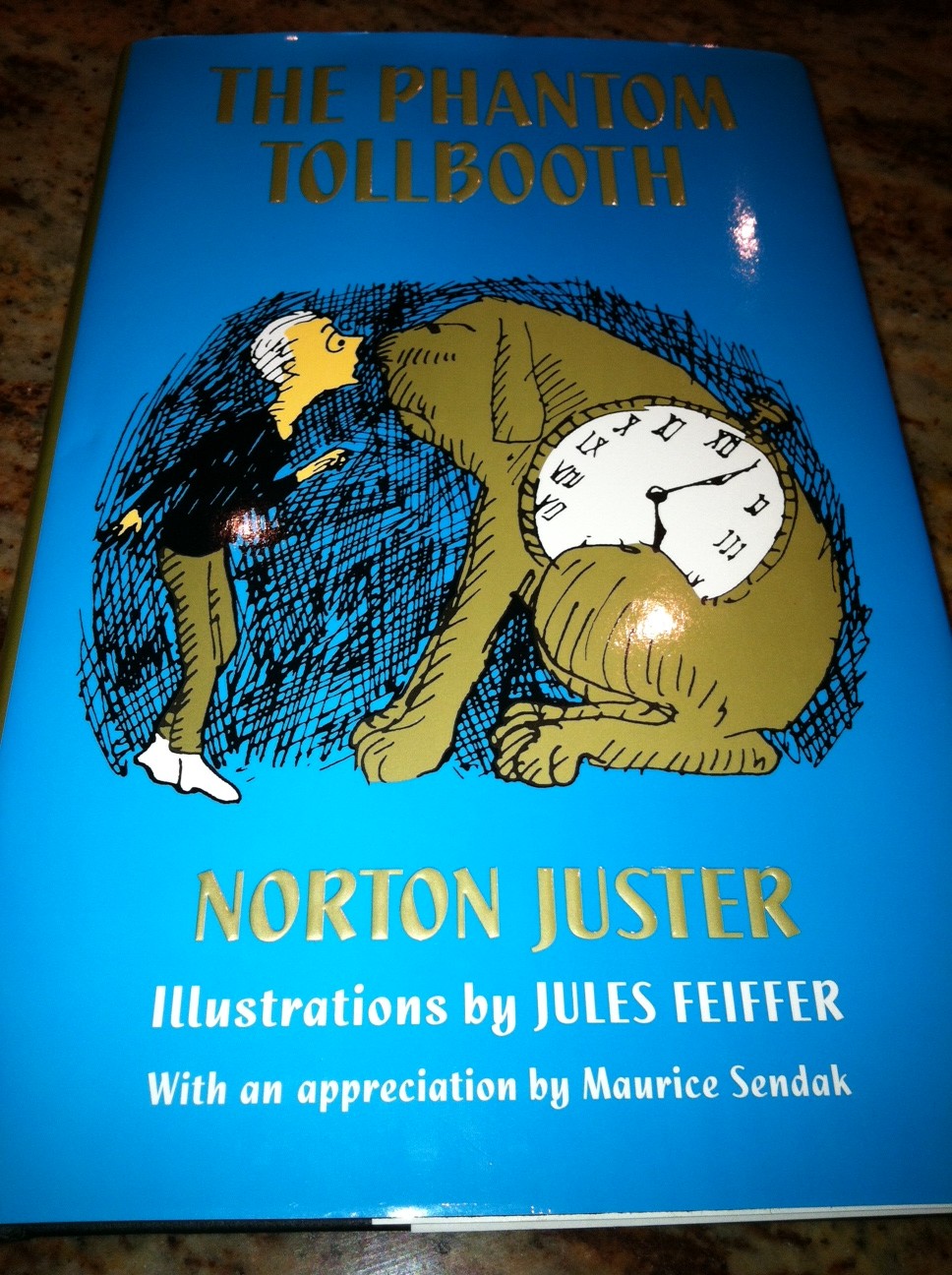
Hers was more directly related to my mom, of course. Thus I have decided to share the book that they featured at the event last month: The Phantom Tollbooth by Norton Juster and illustrated by Jules Feiffer.
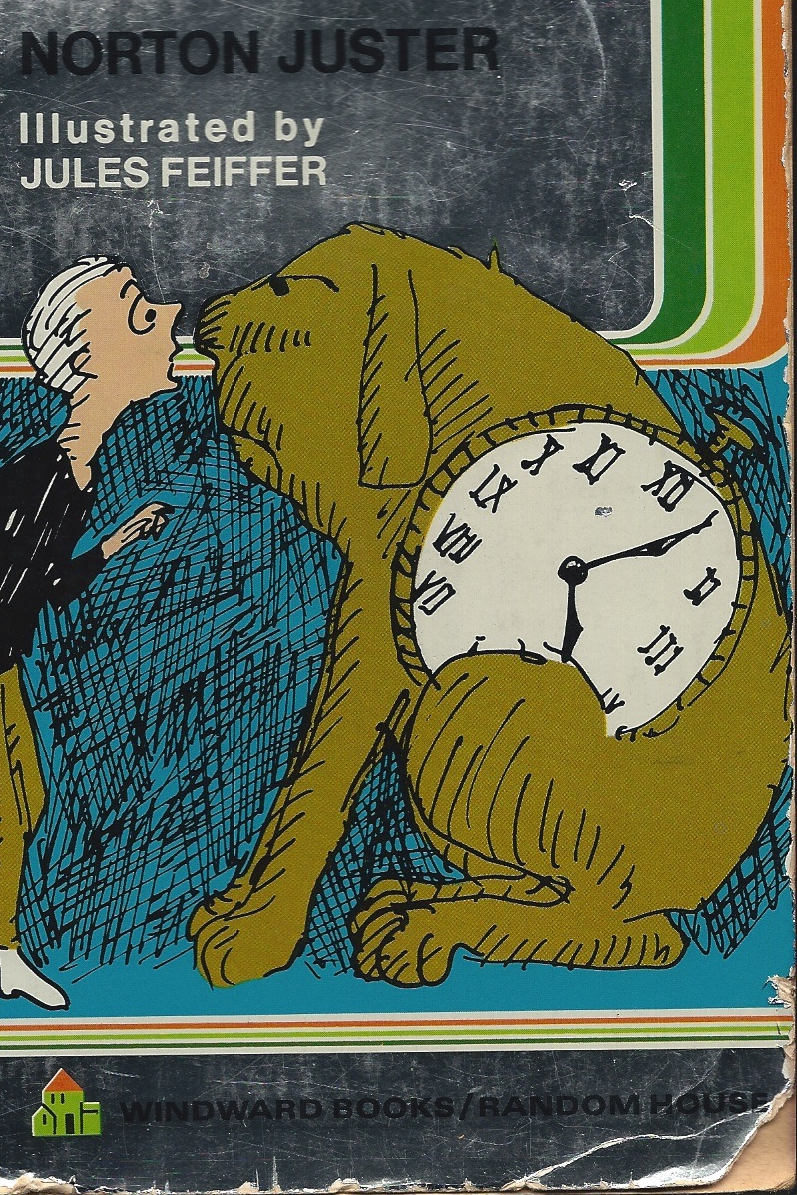
While it does not have a Hawaii connection, the author is Jewish (which I did not know until recently) and I LOVED this book as a child. I still have my copy from way back when that my younger girl enjoyed reading a few years ago.
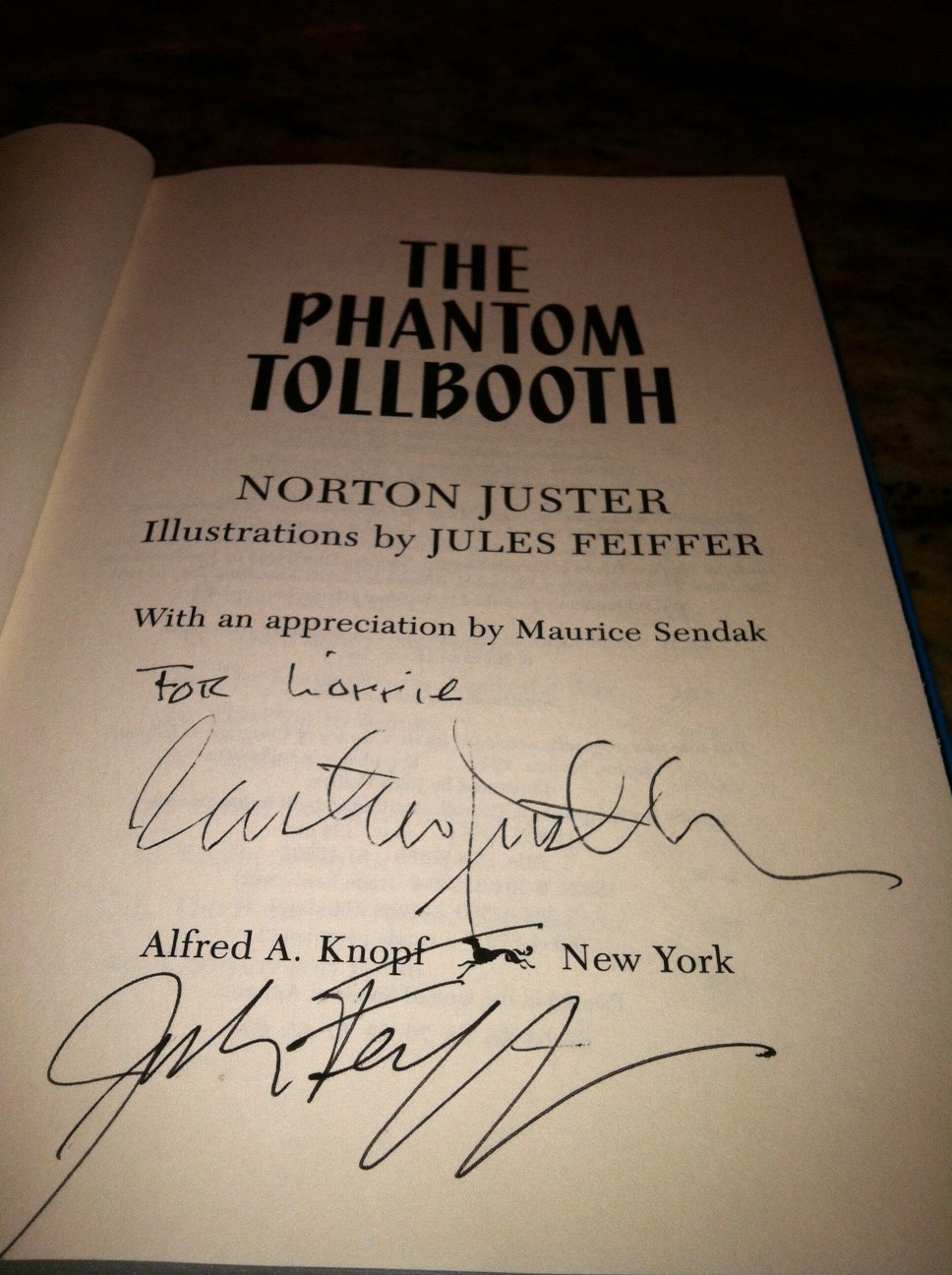
And now I have a copy signed by the author thanks to my sister (and the author). Mahalo.
This is less of a review and more of a recommend. Perhaps my favorite places that the characters Milo and Tock visit are the Doldrums and Dictionopolis, especially the Doldrums. To this day I can feel the images and mood that Juster creates just by the mention of the word Doldrums.
You are never too old to read The Phantom Tollbooth. Perhaps on the 50th anniversary of its debut is a perfect time. And if you want to borrow a copy, if you promise to be very careful with it, I might lend you one of mine.
I don’t have much of a sweet tooth. I don’t eat a lot of candy and I can usually pass up dessert. I am more of a savory kind of gal and I prefer salty and crunchy when it comes to snacks.
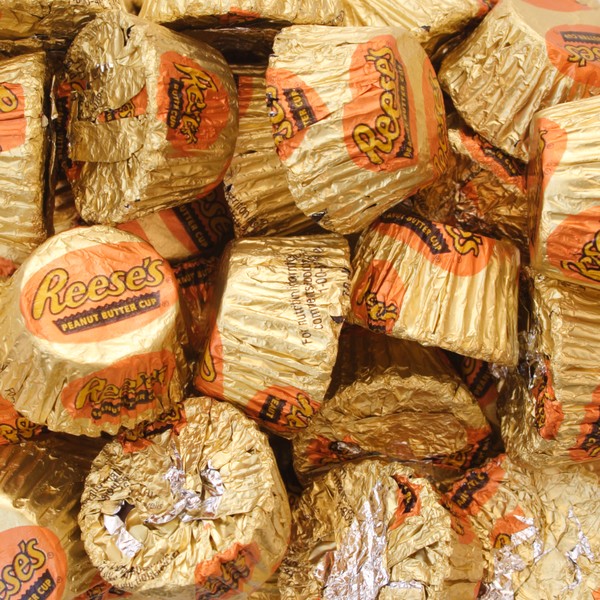
But I LOVE Reese’s Peanut Butter Cups. I am hard put to pass up one of those chocolate and peanut butter delights. While I would not describe myself as a glutton in this arena, you could say that they are one of my guilty pleasures. And only Reese’s will do, other cups do not make the cut.
After my kids go trick or treating for Halloween and they leave those bags of candy in the snack drawer for weeks and months, it is not the Sour Patch Kids or the Laughy Taffy that sense my weaker moments and call me to the kitchen. I am not drawn to the Nestle’s Crunch or even the M & M’s. It is only the Reese’s that entice me.
I confess that I have been known to sneak a few from the kids’ bags on an occasion or two. They are used to it and forgive my minor transgression. While I can’t really repent, I do tell them to take the Reese’s Peanut Butter Cups to school and share them with their friends. I must be saved from temptation.
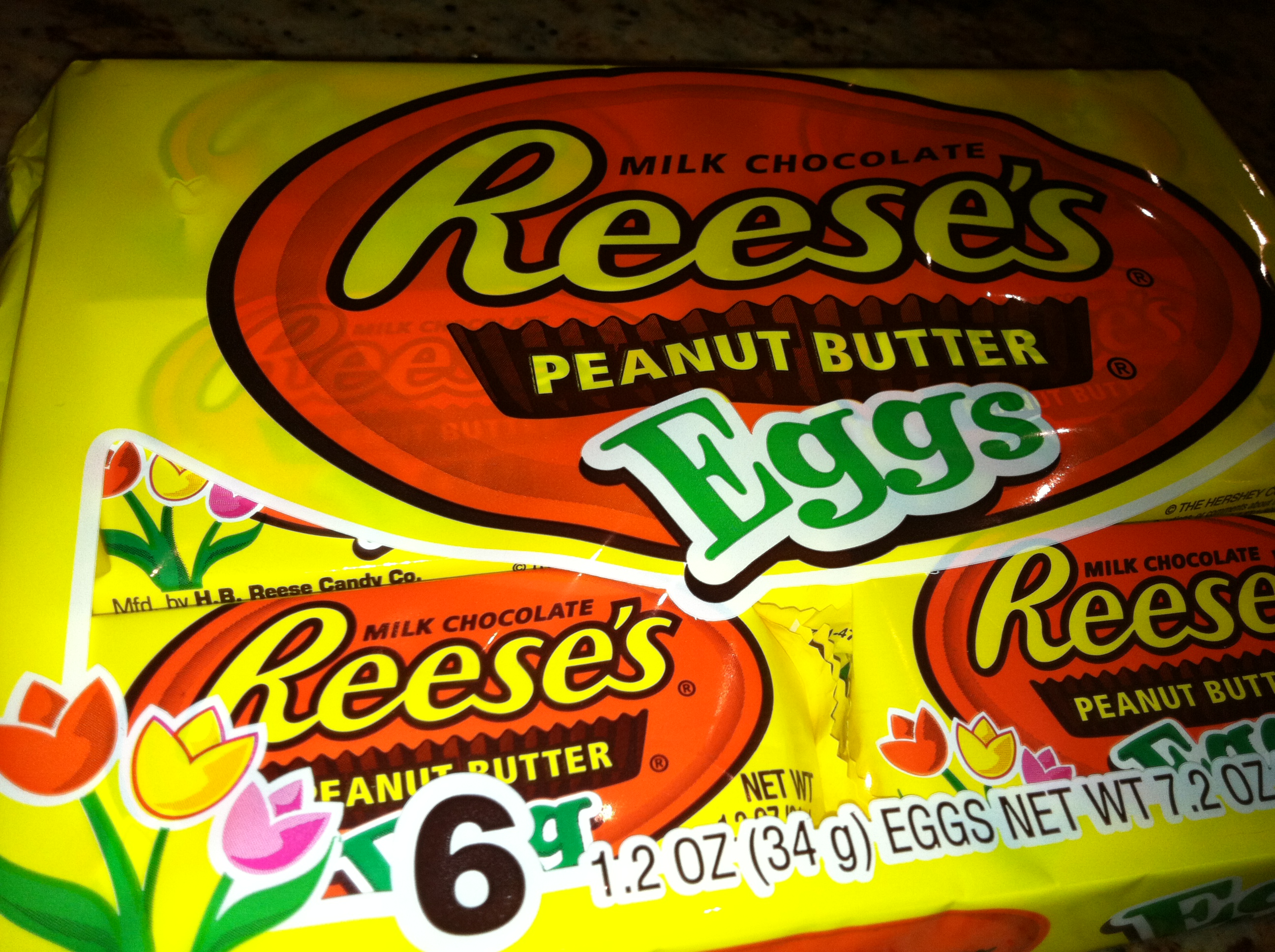
What is most interesting about my predilection for this divinely scrumptious confection is that my favorite form of Reese’s Peanut Butter Cups is the Easter egg version. I can’t tell you why. It’s just better. As it happens, my second favorite is the Christmas Tree. Oh the irony.
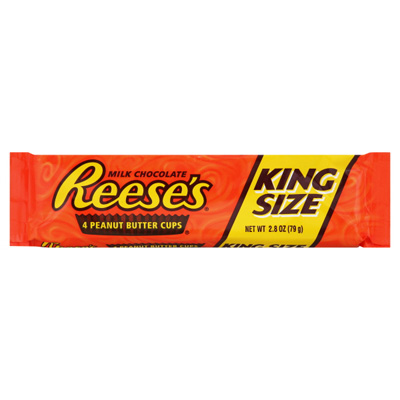
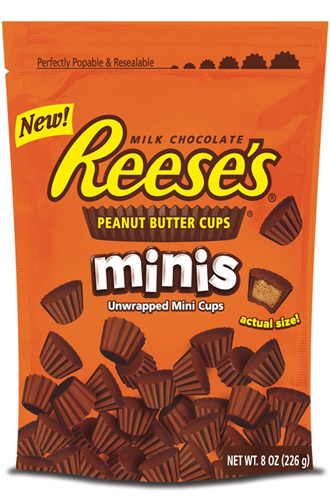
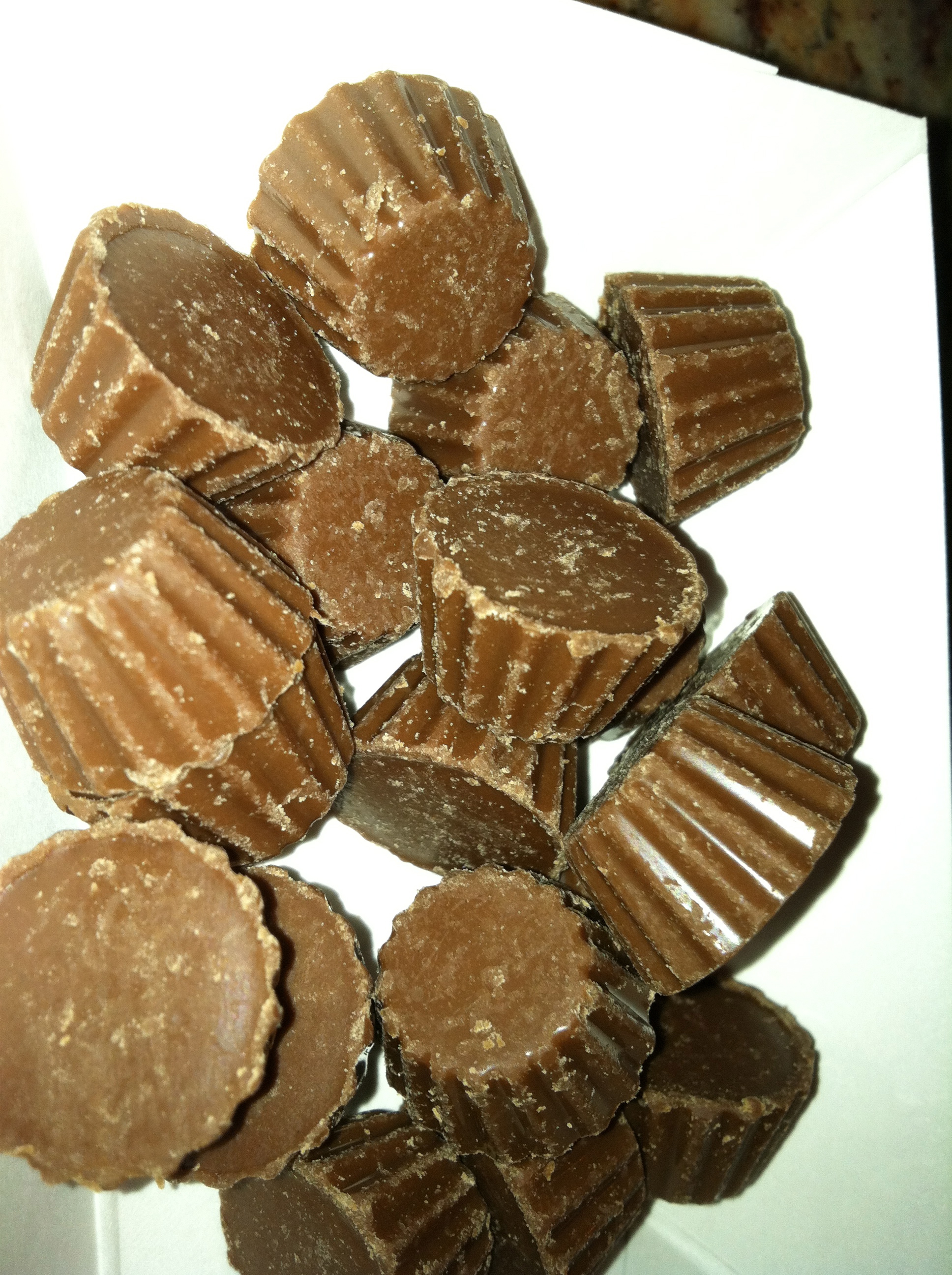
Maybe it is the shape that affects the flavor. Or perhaps it has to do with the size that creates a different chocolate to peanut butter ratio. I’m not really sure. I know it is not a simple matter of volume because my least favorite is the King Size version and my third favorite happens to be the minis. You can pop those in your mouth almost mindlessly while watching TV or writing a blog post. More dangerous than Halloween Candy.
Maybe it’s because they are made in a special way for a holiday that I like the Easter eggs and Christmas trees so much, even if it’s not my holiday. I only get to eat them each once a year–or more considering they start featuring them in the stores months before their respective holidays actually occur.
I’d be happy to embrace a Reese’s Peanut Butter Cup dreidel. If they applied the egg to Passover and changed the packaging, I’d be totally okay with that, except for the kosher for Passover part. Maybe they could try a shofar for Rosh Ha Shanah. Now that would be a sweet way to bring in the New Year.
Bottom line is that when it comes to Reese’s Peanut Butter Cups I am not picky about the holiday. I’ll eat them in pretty much any shape, size or form.
I love word games. My parents used to play them with us at the dinner table. I’ve been playing one with my kids lately and we’ve been having a lot of fun with it. It has to do with an article I read in Oprah magazine that was about an interview with June Ambrose. One of the questions she was asked is, “What is your favorite made up word? Her answer was: “Glamouflage. It’s when you use a bold piece to shield a part of your appearance: big sunglasses when you didn’t have time for makeup….”
I thought it was so cool that I asked my kids to share what made up words they like. Teenager had several questionable ones that I will not repeat in this blog. Several were related to cross gender such as “shemale.” Middle Schooler shared a couple too. My favorite of hers was, “Con’t.” Can, but won’t. So apropos.
My friend Kathy shared one with me last summer that I really like, “Brocket,” a combination of bra and pocket. That’s where I put my cell phone when I go for a walk or the change I get at the snack bar when I am not carrying a purse.
A few days ago I saw a commercial for Yoplait along the same theme:
I guess we are not the only ones playing this game.
It turns out that my all time favorite made up word is not a silly one and conveniently for this blog post happens to be a combination of Hebrew and Hawaiian.
The unique opportunity to know and use this word is one of the reasons that I love living in Hawaii: Shaloha, Shalom and Aloha. Each is used in a similar way, as a greeting, in their respective languages. But they mean so much more than hello and good-bye. Shalom means peace. Aloha is the breath of life. I like to think that Shaloha means that I greet you with peace, the breath of life.
This is a great opportunity for you to share some of your favorite made up words. It will be fun.
A few months ago, Rabbi Schaktman recommended a book to me. Actually, I think he recommended an author and mentioned the title of one of her parenting books. He had recently returned from the Union of Reform Judaism’s (URJ) Biennial Convention where he heard her speak. He said that she was incredibly dynamic.
Always up for some good advice on parenting, I was intrigued and went home to look her up. Her name is Wendy Mogel and after reading about her on the URJ Biennial’s and Amazon’s websites I immediately downloaded both of her books onto my iPad: The Blessing of a Skinned Knee and TheBlessing of a B Minus. I then proceeded to devour each of them. I am still savoring the wonderful framework that she presents for raising my Jewish kids.
If I had to choose between the two books as to which is my favorite, I’d pick: The Blessing of a Skinned Knee: Using Jewish Teachings to Raise Self-Reliant Children. Maybe it is because I read this one first. It introduced me to the concept of raising my kids from a Jewish perspective and I immediately connected. I teach them about being Jewish, but this is different. It is more about being Jewish in the choices that I make in regards to parenting.
I enjoyed the beginning of the book in which Mogel tells the story of how she embraced her Jewish self and chose to study more about Judaism. I’ve been talking to my husband lately about the idea that we don’t have to wait to go to Temple to be Jewish. We can enjoy our religion and culture in our everyday lives at home. I was thinking that we’d celebrate Shabbat and Havdalah and talk more at the dinner table.Reading this book reaffirmed a lot of choices that I make by instinct and encouraged me to understand my children in new ways.
I had no idea how often I embrace what she calls the “Three cornerstone principles of Jewish living….moderation, celebration and sanctification.” Now that she has named it for me, I am able to practice it even more.
Most of the reviews on Amazon are much better than I could write here. They also affirm that it is good parenting advice whether you are Jewish or not. I will simply close by saying that they are the two best parenting books I have ever read. They have made a huge impact on my choices. They make me feel better about being a parent and being Jewish. I wish I had read them sooner. I’d love to meet Wendy Mogel and it would be totally awesome if she came to Hawaii to speak.
You are probably thinking I am going to write something about the bible or the Torah or G-d’s word. That’s what I would think if I saw a post in a blog about being Jewish that has the title “The Word.”
I’m not. Instead, I am going to introduce weekly feature #2.
The first feature I introduced this week is “Book of the Week.” Every Tuesday (G-d willing) I am going to share about a book that I have read and attempt some sort of review. That turned out so cool that I thought I’d expand.
I enjoy finding the connection between values expressed through Hawaiian words that correlate with Hebrew words. Thus the title “The Word.” Maybe I should call it “The Word(s).”
Last week I used the example of Kahiau and Tzedakkah, both about giving from the heart without the expectation of anything in return. Totally Righteous. I am inspired to continue.
A few years ago I embraced the opportunity to give a speech at my daughter’s Bat Mitzvah. I talked about her blessing of being Jewish and Hawaiian and mentioned some of the values that both cultures share. So to kick off this regular feature, I thought I’d choose a set of words from that speech:
Imua and Kadima: Move forward, make progress, work together for a common goal.
Those of you who live in Hawaii, know Hawaiian, are Jewish or know Hebrew know which one is which. But for the others: Imua is Hawaiian and Kadima is Hebrew. Both have prevalent use in their respective cultures.
Imua is the motto for many organizations, Kadima the name of Jewish schools and camps.
When local sports teams huddle before a game and all put their hands together in the middle for a cheer, they clap and grunt “Imua.”
Jewish kids at day camp sing in loud joyous voices, “Kadima, Hey, Kadima, Hey,” clapping their hands in enthusiastic accompaniment.
Both are strong, evoking a sense community, of power and of engagement.
A great start for this new feature in my blog: Let’s move forward together.
I would like to introduce a new feature to this blog: Book of the Week. Every week I will share a book with you that I have enjoyed……or not!
Once an English teacher, always an English teacher.
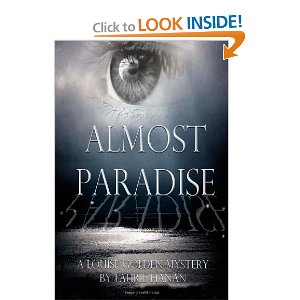
For my debut post in this category I am choosing Almost Paradise written by my friend and neighbor and local member of the Jewish community (and Kapolei SJS Carpool driver), Laurie Hanan.
It you didn’t get an autographed copy from me for Chanukkah or Christmas or because I had lunch with you recently, then you should order a copy from Amazon and read it right away. If you want an autograph, let me know…I have a few connections.
While the book does not have a lot of Jewish content, it has a few Israeli characters and some references to Hebrew. But that’s not why I like the book. Besides the good story, I like the book because of the local setting. The author (my friend Laurie) captures what it feels like to live in Hawaii without overdoing it. The local flavor is delicious! I guess you could say that the book is not about Hawaii, it is set in Hawaii.
My two favorite parts are the beginning and the end. I liked getting to know the characters. It was hard at first to separate the heroine: Louise Golden from Laurie Hanan. I kept wanting them to be the same person. She uses details from her life to color her characters, but they are not her or her family, just minor reflections of each. Once I was able to separate myself from that, I settled into the story. You probably won’t have that problem unless you know Laurie.
I usually hate the end of books and movies and TV shows. Mostly I am disappointed that the story is over and I have to put the characters away. It’s hard to just end, life doesn’t work that way. That did not happen with this book. It was the opposite. The ending was beautiful. I felt like I was there, not reading about it.
Laurie wove a wonderful portrayal of local lifestyle into a good old-fashioned murder mystery. I keep thinking I might run into Louise Golden one of these days.
I hear Laurie has a new book coming out soon, another Louise Golden mystery. Perfect, now I know what to give people for Chanukkah next year.
You can read more about her characters and her books all on her blog: West of the Equator.
The other day Teenager asked me if I would ever live in Honolulu. I thought for less than a second and responded with a solid, “No, I like the west side.” We’ve been spending a lot of time driving back and forth to Town lately and more than once the thought has crossed my mind how nice it would be to have a place where we could spend the night and avoid the traffic that plagues us on much of those journeys.
Then I thought of the congestion and the lack of space and the crowded coastline and I knew that I would not be looking to Honolulu as a place for my primary residence, not just yet.
Then, on Saturday morning, I arrived at the Yee King Tong Cemetery near Punchbowl (National Memorial Cemetery of the Pacific) to meet my friend Shareen for our volunteer stint judging student essays in the Eddie Aikau Foundation’s annual Eddie Would Go essay contest and I totally changed my mind.
I turned left into the lane that leads to the cemetery and the adjacent Aikau home and entered one of those wondrous places I like to think of as “Real Hawaii.” If I could live somewhere like that, Honolulu or anywhere, I would move in a heartbeat.
I could feel the aloha the minute I arrived.
The foundation holds the annual contest as part of their mission to “share Eddie Aikau’s life, contributions and accomplishments while promoting education and the advancement of Hawaiian culture.”
Here is the 2012 prompt:
As a City and County lifeguard, Eddie Aikau often risked his life to make sure the beaches were safe for everyone. He made the ultimate sacrifice by giving his life in an attempt to save the crew on the Polynesian voyaging canoe ―Hokule’a‖.
Eddie’s actions reflected the Hawaiian values of KOKUA (to help) and KAHIAU (to give generously with the heart, without expecting anything in return).
How do these values inspire your actions and how do they influence your decision of who to help, when you can’t help everyone.
I read the essays thinking about the teenagers who wrote them. How lucky they are to have a role model like Eddie Aikau. They wrote with ease about Kokua and Kahiau. They told stories of helping their parents and their grandparents and volunteering with their churches and school groups to feed the homeless and donate clothes and toys. Kokua and Kahiau are embedded in the aloha that runs in their veins.
I couldn’t help but relate the concept of Kahiau to that of Tzedakah–to give generously from the heart without asking for anything in return is certainly righteous. We give because it is right. And the highest form of giving is when the giver does not know the receiver and the receiver does not know the giver.
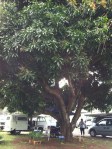
It all came together for me near the big mango tree in the side yard of Myra Akau’s house (she is Eddie’s sister). Kahiau, Tzedakah, Kokua, Aloha–In a place like this, no problem.









 Being Jewish in Hawaii