Confessions of a Jewish Mother: I bought Easter candy at the grocery store yesterday!

I don’t have much of a sweet tooth. I don’t eat a lot of candy and I can usually pass up dessert. I am more of a savory kind of gal and I prefer salty and crunchy when it comes to snacks.

But I LOVE Reese’s Peanut Butter Cups. I am hard put to pass up one of those chocolate and peanut butter delights. While I would not describe myself as a glutton in this arena, you could say that they are one of my guilty pleasures.  And only Reese’s will do, other cups do not make the cut.

After my kids go trick or treating for Halloween and they leave those bags of candy in the snack drawer for weeks and months, it is not the Sour Patch Kids or the Laughy Taffy that sense my weaker moments and call me to the kitchen. I am not drawn to the Nestle’s Crunch or even the M & M’s. It is only the Reese’s that entice me.

I confess that I have been known to sneak a few from the kids’ bags on an occasion or two. They are used to it and forgive my minor transgression. While I can’t really repent, I do tell them to take the Reese’s Peanut Butter Cups to school and share them with their friends. I must be saved from temptation.

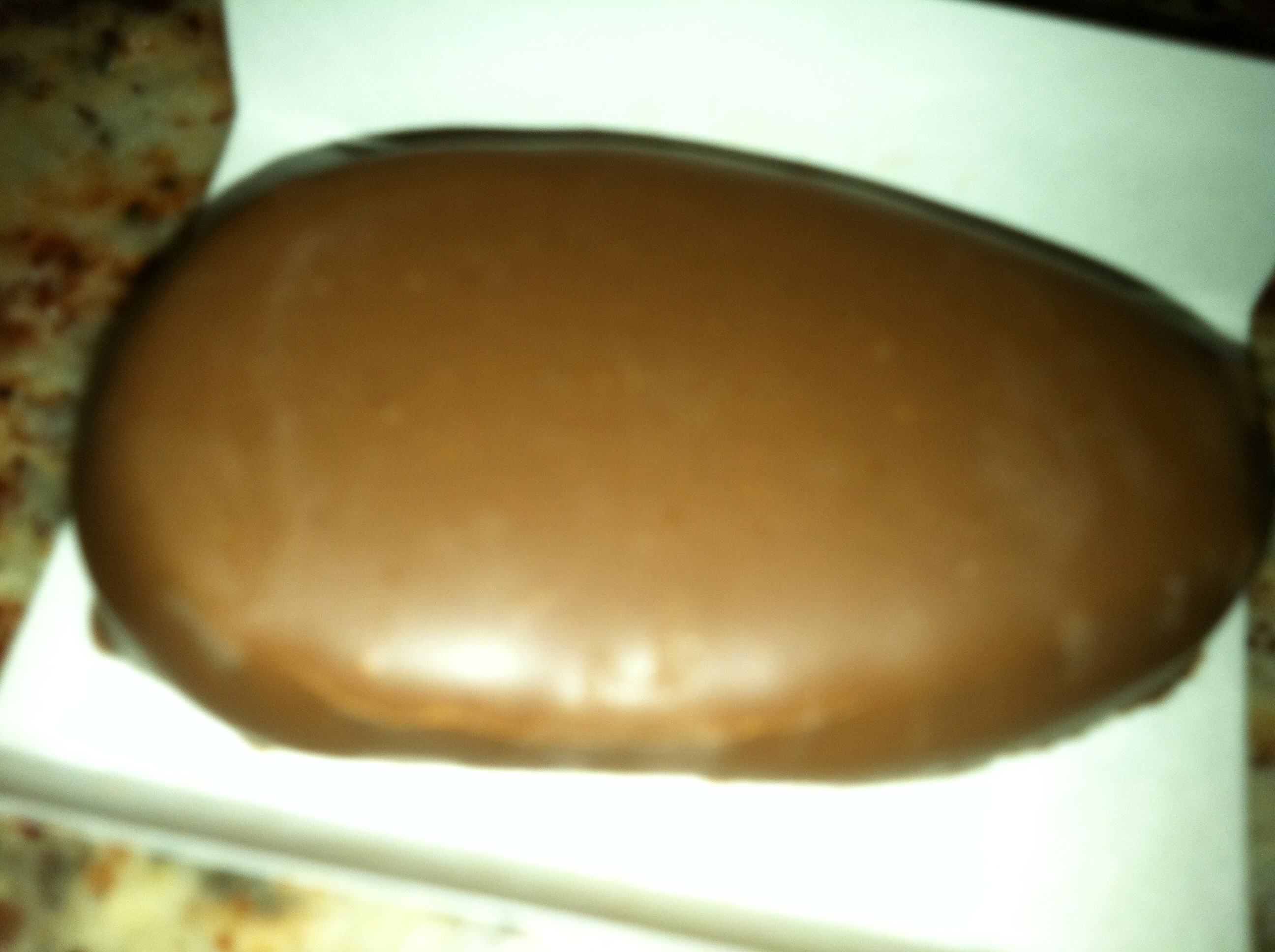
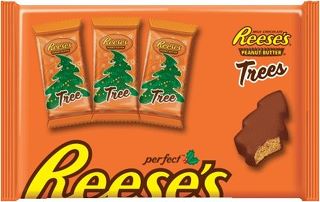
What is most interesting about my predilection for this divinely scrumptious confection is that my favorite form of Reese’s Peanut Butter Cups is the Easter egg version. I can’t tell you why. It’s just better.  As it happens, my second favorite is the Christmas Tree. Oh the irony.

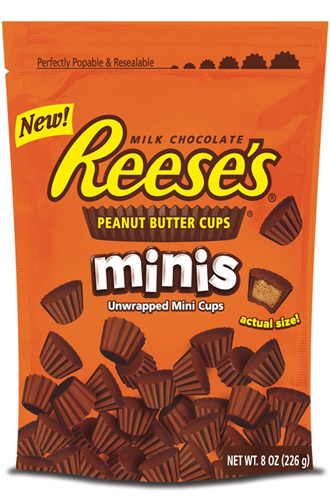
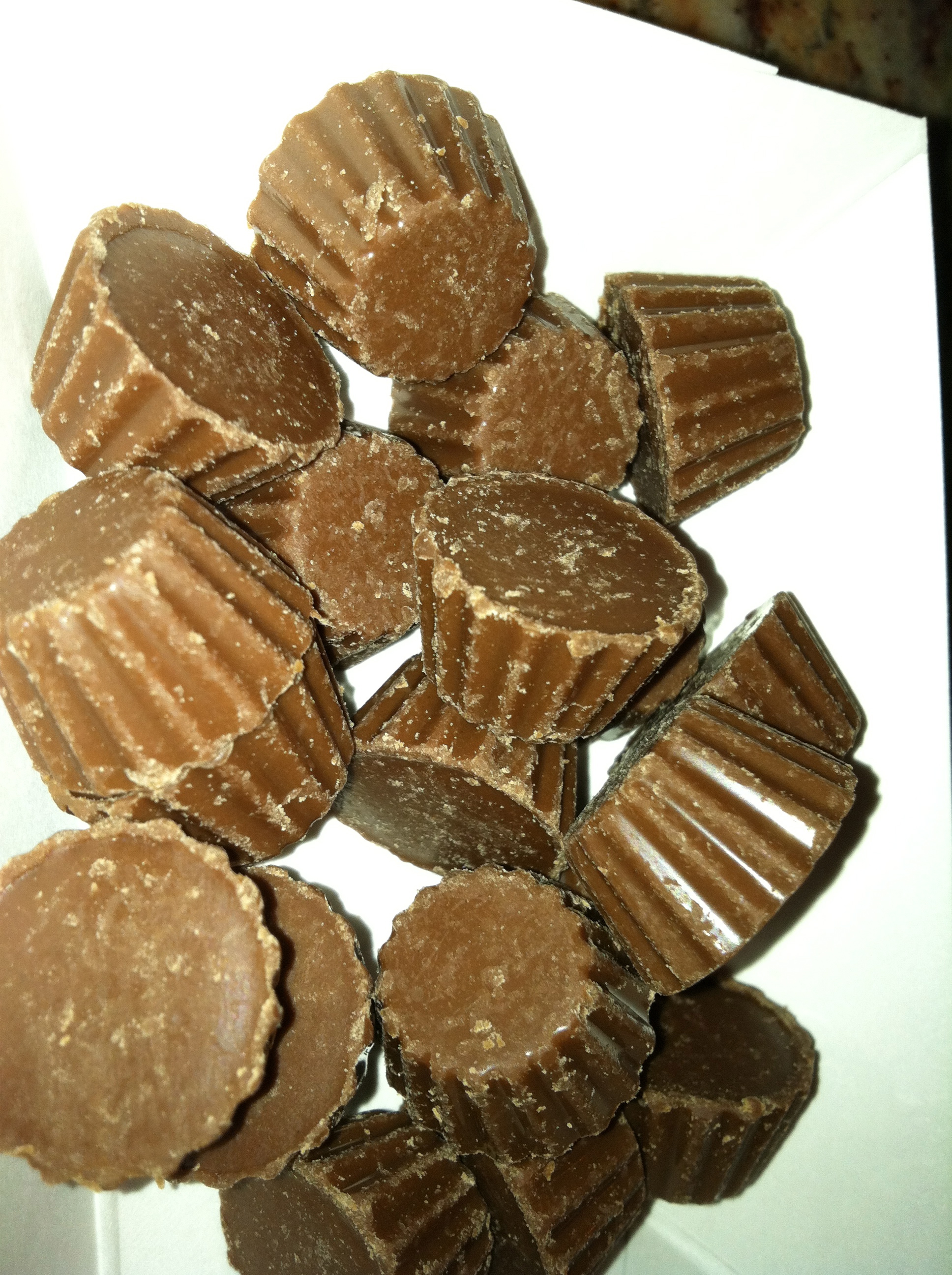
Maybe it is the shape that affects the flavor. Or perhaps it has to do with the size that creates a different chocolate to peanut butter ratio. I’m not really sure. I know it is not a simple matter of  volume because my least favorite is the King Size version and my third favorite happens to be the minis. You can pop those in your mouth almost mindlessly while watching TV or writing a blog post. More dangerous than Halloween Candy.

Maybe it’s because they are made in a special way for a holiday that I like the Easter eggs and Christmas trees so much, even if it’s not my holiday. I only get to eat them each once a year–or more considering they start featuring them in the stores months before their respective holidays actually occur.

I’d be happy to embrace a Reese’s Peanut Butter Cup dreidel. If they applied the egg to Passover and changed the packaging, I’d be totally okay with that, except for the kosher for Passover part. Maybe they could try a shofar for Rosh Ha Shanah. Now that would be a sweet way to bring in the New Year.

Bottom line is that when it comes to Reese’s Peanut Butter Cups I am not picky about the holiday. I’ll eat them in pretty much any shape, size or form.

I’d like to take this unique opportunity to share a new word with you

I love word games. My parents used to play them with us at the dinner table. I’ve been playing one with my kids lately and we’ve been having a lot of fun with it. It has to do with an article I read  in Oprah magazine that was about an interview with June Ambrose.  One of the questions she was asked is, “What is your favorite made up word? Her answer was: “Glamouflage. It’s when you use a bold piece to shield a part of your appearance: big sunglasses when you didn’t have time for makeup….”

I thought it was so cool that I  asked my kids to share what made up words they like. Teenager had several questionable ones that I will not repeat in this blog. Several were related to cross gender such as “shemale.” Middle Schooler shared a couple too. My favorite of hers was, “Con’t.” Can, but won’t. So apropos.

My friend Kathy shared one with me last summer that I really like, “Brocket,” a combination of bra and pocket. That’s where I put my cell phone when I go for a walk or the change I get at the snack bar when I am not carrying a purse.

A few days ago I saw a commercial for Yoplait along the same theme:

I guess we are not the only ones playing this game.

It turns out that my all time favorite made up word is not a silly one and conveniently for this blog post happens to be a combination of Hebrew and Hawaiian.

The unique opportunity to know and use this word is one of the reasons that I love living in Hawaii: Shaloha, Shalom and Aloha. Each is used in a similar way, as a greeting, in their respective languages. But they mean so much more than hello and good-bye. Shalom means peace. Aloha is the breath of life. I like to think that Shaloha means that I greet you with peace, the breath of life.

This is a great opportunity for  you to share some of your favorite made up words. It will be fun.

Shabbat Shaloha.

The blessing of a good book (or two)

A few months ago, Rabbi Schaktman recommended a book to me. Actually, I think he recommended an author and mentioned the title of one of her parenting books. He had recently returned from the Union of Reform Judaism’s (URJ) Biennial Convention where he heard her speak. He said that she was incredibly dynamic.

Always up for some good advice on parenting, I was intrigued and went home to look her up. Her name is Wendy Mogel and after reading about her on the URJ Biennial’s and Amazon’s websites I immediately downloaded both of her books onto my iPad: The Blessing of a Skinned Knee and The Blessing of a B Minus. I then proceeded to devour each of them. I am still savoring the wonderful framework that she presents for raising my Jewish kids.

If I had to choose between the two books as to which is my favorite, I’d  pick: The Blessing of a Skinned Knee: Using Jewish Teachings to Raise Self-Reliant Children. Maybe it is because I read this one first. It introduced me to the concept of raising my kids  from a Jewish perspective and I immediately connected. I teach them about being Jewish, but this is different. It is more about being Jewish in the choices that I make in regards to parenting.

I enjoyed the beginning of the book in which Mogel tells the story of how she embraced her Jewish self and chose to study more about Judaism. I’ve been talking to my husband lately about the idea that we don’t have to wait to go to Temple to be Jewish. We can enjoy our religion and culture in our everyday lives at home. I was thinking that we’d celebrate Shabbat and Havdalah and talk more at the dinner table.Reading this book reaffirmed a lot of choices that I make by instinct and encouraged me to understand my children in new ways.

I had no idea how often I embrace what she calls the “Three cornerstone principles of Jewish living….moderation, celebration and sanctification.” Now that she has named it for me, I am able to practice it even more.

Most of the reviews on Amazon are much better than I could write here. They also affirm that it is good parenting advice whether you are Jewish or not. I will simply close by saying that they are the two best parenting books I have ever read. They have made a huge impact on my choices. They make me feel better about being a parent and being Jewish. I wish I had read them sooner. I’d love to meet Wendy Mogel and it would be totally awesome if she came to Hawaii to speak.

Thanks, Rabbi Schaktman, for the suggestion.

The Word

You are probably thinking I am going to write something about the bible or the Torah or G-d’s word. That’s what I would think if I saw a post in a blog about being Jewish that has the title “The Word.”

I’m not. Instead, I am going to introduce weekly feature #2.

The first feature I introduced this week is “Book of the Week.”  Every Tuesday (G-d willing) I am going to share about a  book that I have read and attempt some sort of review. That turned out so cool  that I thought I’d expand.

I enjoy finding the connection between values expressed through Hawaiian words that correlate with Hebrew words. Thus the title “The Word.” Maybe I should call it “The Word(s).”

Last week I used the example of Kahiau and Tzedakkah, both about giving from the heart without the expectation of anything in return. Totally Righteous. I am inspired to continue.

A few years ago I embraced the opportunity to give a speech at my  daughter’s Bat Mitzvah. I talked about her blessing of being Jewish and Hawaiian and mentioned some of the values that both cultures share. So to kick off this regular  feature,  I thought I’d choose a set of words from that speech:

Imua and Kadima: Move forward, make progress, work together for a common goal.

Those of you who live in Hawaii, know Hawaiian, are Jewish or know Hebrew know which one is which.  But for the others: Imua is Hawaiian and Kadima is Hebrew. Both have prevalent use in their respective cultures.

Imua is the motto for many organizations, Kadima the name of Jewish schools and camps.

When local sports teams huddle before a game and all put their hands together in the middle for a cheer, they clap and grunt “Imua.”

Jewish kids at day camp sing in loud joyous voices, “Kadima, Hey, Kadima, Hey,” clapping their hands  in enthusiastic accompaniment.

Both  are strong, evoking a sense community, of power and of engagement.

A great start for this new feature in my blog: Let’s move forward together.

Imua: Kadima

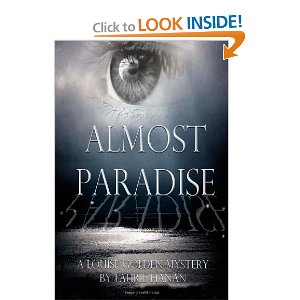
Book of the week: Almost Paradise by Laurie Hanan

I would like to introduce a new feature to this blog: Book of the Week. Every week I will share a book with you that I have enjoyed……or not!

Once an English teacher, always an English teacher.

For my debut post in this category I am choosing Almost Paradise written by my friend and neighbor and local member of the Jewish community (and Kapolei SJS Carpool driver), Laurie Hanan.

It you didn’t get an autographed copy from me for Chanukkah or Christmas or because I had lunch with you recently, then you should order a copy from Amazon and read it right away. If you want an autograph, let me know…I have a few connections.

While the book does not have a lot of Jewish content, it has a few Israeli characters and some references to Hebrew. But that’s not why I like the book. Besides the good story, I like the book because of the local setting. The author (my friend Laurie) captures what it feels like to live in Hawaii without overdoing it. The local flavor is delicious! I guess you could say that the book is not about Hawaii, it is set in Hawaii.

My two favorite parts are the beginning and the end. I liked getting to know the characters. It was hard at first to separate the heroine: Louise Golden from Laurie Hanan. I kept wanting them to be the same person. She uses details from her life to color her characters, but they are not her or her family, just minor reflections of each. Once I was able to separate myself from that, I settled into the story. You probably won’t have that problem unless you know Laurie.

I usually hate the end of books and movies and TV shows.  Mostly I am  disappointed that the story is over and I have to put the characters away. It’s hard to just end, life doesn’t work that way. That did not happen with this book. It was the opposite. The ending was beautiful. I felt like I was there, not reading about it.

Laurie wove  a wonderful portrayal of local lifestyle into a good old-fashioned murder mystery. I keep thinking I might run into Louise Golden one of these days.

I hear Laurie has a new book coming out soon, another Louise Golden mystery. Perfect, now I know what to give people for Chanukkah next year.

You can read more about her characters and her books all on her blog: West of the Equator.

To give generously from the heart without asking for anything in return

The other day Teenager asked me if I would ever live in Honolulu. I thought for less than a second and responded with a solid, “No, I like the west side.” We’ve been spending a lot of time driving back and forth to Town lately and more than once the thought has crossed my mind how nice it would be to have a place where we could spend the night and avoid the traffic that plagues us on much of those journeys.

Then I thought of the congestion and the lack of space and the crowded coastline and I knew that I would not be looking to Honolulu as a place for my primary residence, not just yet.

Then, on Saturday morning, I arrived at the Yee King Tong Cemetery near Punchbowl (National Memorial Cemetery of the Pacific) to meet my friend Shareen for our volunteer stint judging student essays in the Eddie Aikau Foundation’s annual Eddie Would Go essay contest and I totally changed my mind.

I turned left into the lane that leads to the cemetery and the adjacent Aikau home and entered one of those wondrous places I like to think of as “Real Hawaii.” If I could live somewhere like that, Honolulu or anywhere, I would move in a heartbeat.

I could feel the aloha the minute I arrived.

The foundation holds the annual contest as part of their mission to “share Eddie Aikau’s life, contributions and accomplishments while promoting education and the advancement of Hawaiian culture.”

Here is the 2012 prompt:

As a City and County lifeguard, Eddie Aikau often risked his life to make sure the beaches were safe for everyone. He made the ultimate sacrifice by giving his life in an attempt to save the crew on the Polynesian voyaging canoe ―Hokule’a‖.
Eddie’s actions reflected the Hawaiian values of KOKUA (to help) and KAHIAU (to give generously with the heart, without expecting anything in return).
How do these values inspire your actions and how do they influence your decision of who to help, when you can’t help everyone.

I read the essays thinking about the teenagers who wrote them. How lucky they are to have a role model like Eddie Aikau. They wrote with ease about Kokua and Kahiau. They told stories of helping their parents and their grandparents and volunteering with their churches and school groups to feed the homeless and donate clothes and toys. Kokua and Kahiau are  embedded in the aloha that runs in their veins.

I couldn’t help but relate the concept of Kahiau to that of Tzedakah–to give generously from the heart without asking for anything in return is certainly righteous. We give because it is right. And the highest form of giving is when the giver does not know the receiver and the receiver does not know the giver.

It all came together for me near the big mango tree in the side yard of Myra Akau’s house (she is Eddie’s sister). Kahiau, Tzedakah, Kokua, Aloha–In a place like this, no problem.

Now I lay me down to sleep, I pray that I get in to a good college

When I think back to my childhood and the lively conversations around the dinner table or the intimate moments when my parents tucked me in at bedtime, I don’t remember many deep discussions about G-d. The almighty HaShem, blessed be (s)he, was not a major player in the lessons taught by my parents almost half a century ago.

We did talk a lot about education. My mother often intimated that of all the Jewish “Values,” education is one of the highest. Like many a nice Jewish girl of my generation, I was practically nursed and weaned on the words “When you get to college.” Academic achievement was top priority in the Gershun household.

Forgive me if this sounds sacrilegious, but education was kind of the god in which my parents believed would make all things right in our lives. It was the key to our success.

Don’t get me wrong, this is not a diatribe against the value of education on which I was raised. I’m just trying to give you an idea of how important it was in the house in which I was grew up.

My parents were the first generation of Americans in each of their families to go to college. Of course they believed in the power of a good education.

So do I. I was a high school teacher for 20 years, for goodness’ sake (I decided not to write the real phrase that I might say here as it is just not appropriate in this blog.)

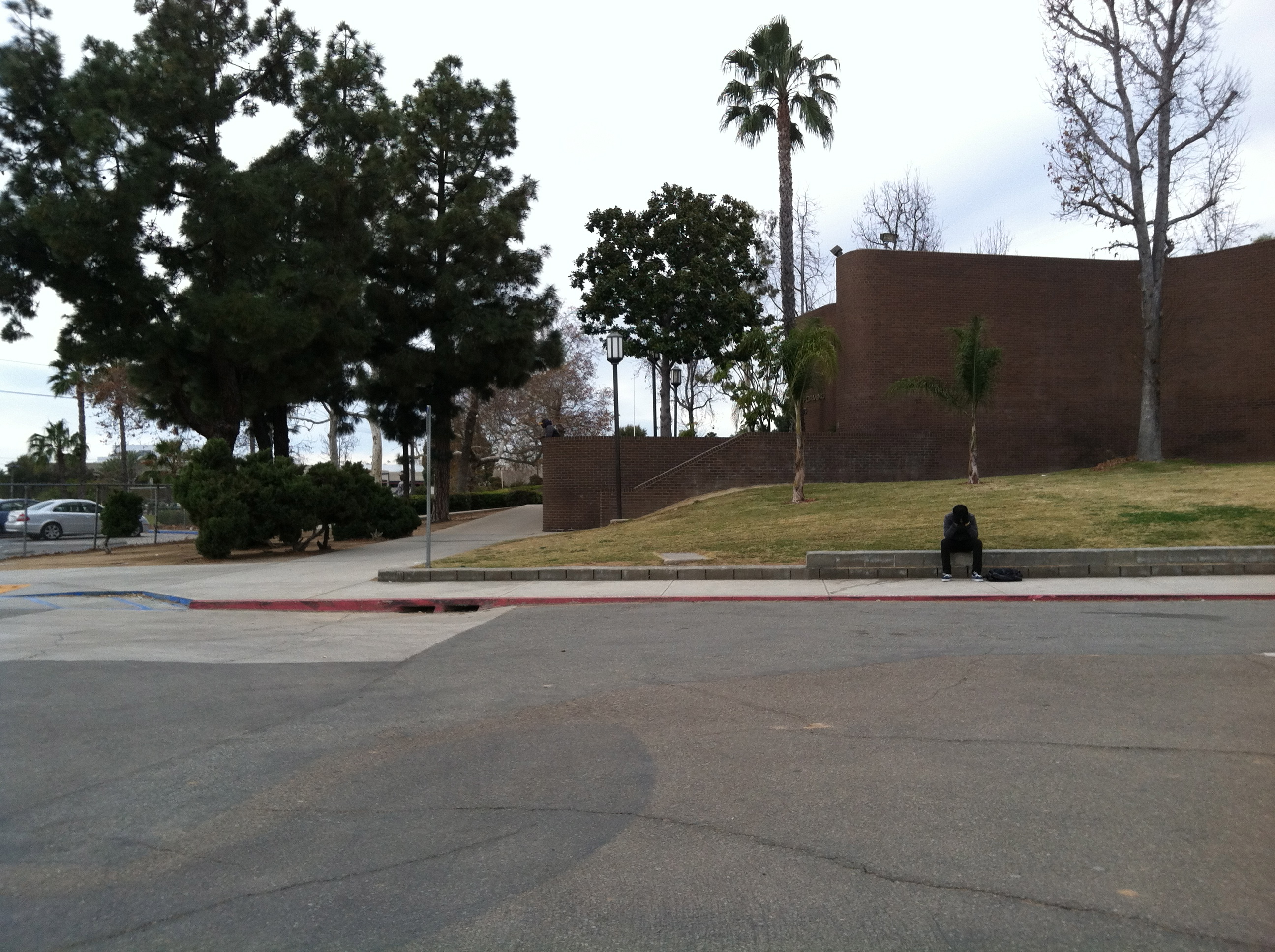
When my sister and I stopped by last month to take pictures at Charles G. Emery Elementary and Sunny Hills High Schools in Southern California, my memory was aroused.
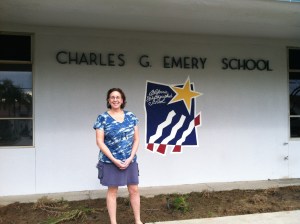
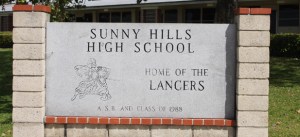
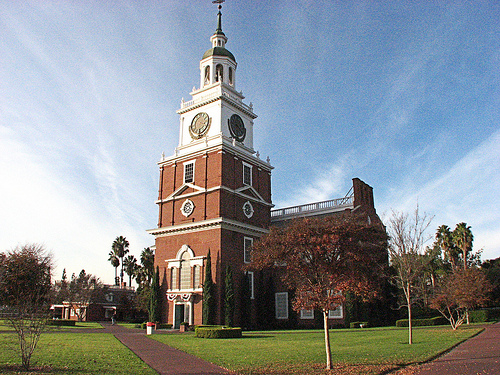
I have not been back to Sunny Hills since I graduated in 1980. I have certainly changed a whole lot more than the campus has since then. It actually looks a bit newer and cleaner than it did in the late 1970’s. The Performing Arts Complex (PAC) and the classrooms look pretty much the same. The quad is a bit smaller due to a few classroom additions and there is no longer a line of pay phones near the front office. No need for those any more.
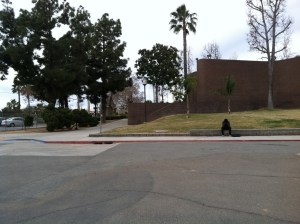
We drove up “the hill” of our teens, the entrance to the school, and parked in the student  parking lot for a self guided tour.

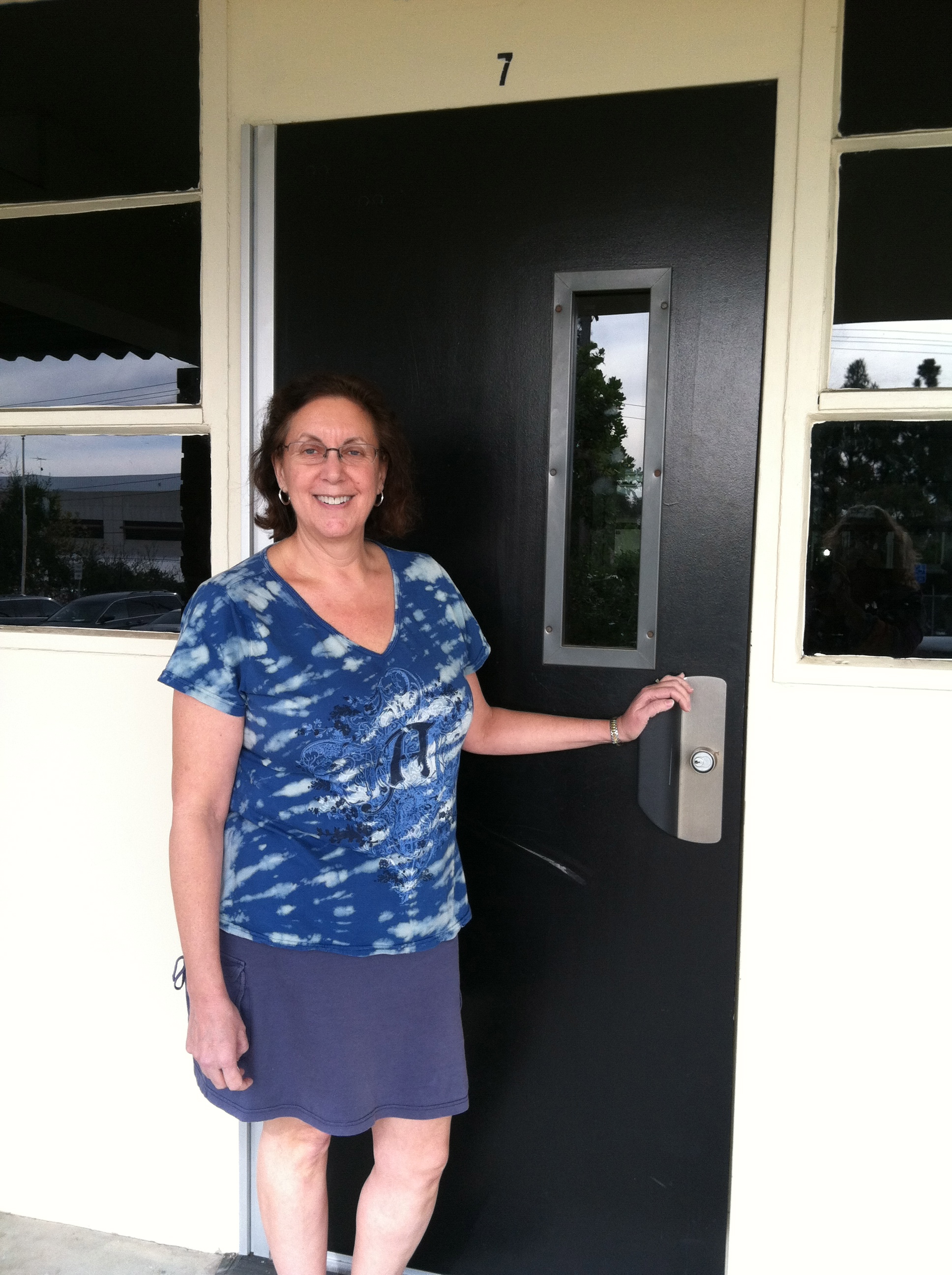
We saved the best for last–Room 7.
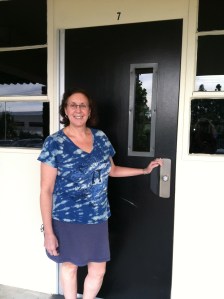
Room 7 is an icon in Gershun family lore, it’s enchanting spell lasting long after graduation ceremonies. Each Gershun girl spent a significant portion of her high school days (and nights) in this classroom, learning about journalism: how to write a news story, how to edit a caption, how to produce a high school newspaper and so much more.

Under the brilliant direction of Mrs. Carol Hallenbeck, we became writers. She is  somewhat of a goddess in the annals of our family’s educational history. We worshiped her.

My oldest sister, Martha, was the first to discover the magical and inspiring world behind the door of what is now the attendance office (so sad).
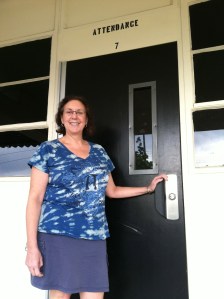
Martha was editor-in-chief (her junior year, I believe) of the award-winning newspaper The Accolade and later the magazine, Excalibur. She filled our dinner table with stories and gossip, painting a vivid and exciting picture of life on a high school newspaper staff. Boo, my other sister, also served her stint as editor-in-chief (was it also in her Junior year?) and I couldn’t wait for my turn.

Alas, I was not selected to serve as Editor-In-Chief of the Accolade. That honor went to my friends Jennifer Lorvick and Julie Wilson (it was well deserved.) I eventually shared the editorship of the Excalibur, with John Yoon and was content.

While not the protege each of my sisters proved to be, I thoroughly enjoyed my own tenure in room 7.

When I joined the faculty at Wai’anae High School in 1991, it never occurred to me that I would become a journalism teacher in the footsteps of Carol Hallenbeck. It happened in 1998 when I agreed to advise the school newspaper, Ka Leo O Wai’anae.

I taught my SP students what I had learned in Room 7 over 20 years before, finding  in it the power to transform an ordinary classroom into an extraordinary setting. Turns out that I am a way better teacher than I ever was a student.

To my pleasure, I saw Mrs. Hallenbeck at a Journalism Education Association convention when we took a Searider Productions trip to California in 2001. I proudly introduced her to my students and colleagues and I bought a book that she co-edited, Practical Ideas for Teaching Journalism. It guided the lessons I taught for the next eight years. Talk about influence.

I later met A.J. Nagaraj who joined the Wai’anae High School faculty in 2006. I was pleased to learn that he is from my home town and  his sister is a former Accolade editor.

I was looking online for information about Mrs. Hallenbeck. I found many stories of the honors she received for her excellence in teaching before she retired a few years ago. I also found a wonderful story from 2005 of another teacher who was honored in Southern California. She mentioned Carol Hallenbeck as a teacher who made a difference in her life.

And now it is time to tie this all together and I’m not sure how.

Back to the Jewish part: I think that we have more conversations about Tikun Olam and Tzedakah with our kids than my parents did with me. I am also trying to add in some blessings and conversations about our beliefs.

I’m not saying that we don’t value education or believe in the power of a good one (just ask my kids how often we bug them about their grades and talk about college). Nor am I saying that my parents did not believe strongly in doing the right thing. I do think that our children learn as much from what we don’t say as what we do, so I try to say it all to avoid confusion (just ask my husband!)

Finally, I discovered that when I look back through the door of Room 7 to the 1970’s at Sunny Hills High School, I still feel the amazing power of that one simple classroom.  I can see the row of manual typewriters along the back wall with several long tables in a parallel line just a few feet away. On the other side are the student desks arranged in three groups, facing each other to facilitate discussion. I also see the magical world that blossomed within, led by one mighty teacher from her podium at the front, and how it developed into a colorful thread woven through the fabric of my family’s story, touching us in the past, present and future.
A walking tour of Nuuanu

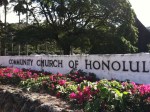
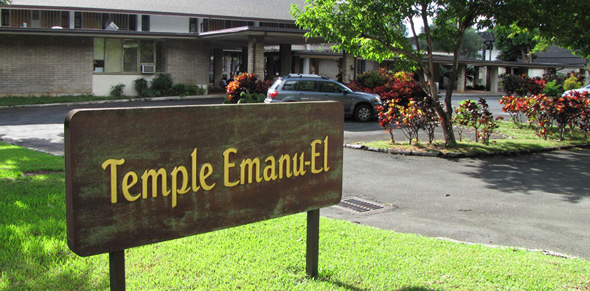
I took a walk with my friend Linda today. We were waiting for our kids who were at Sunday school and decided to make good use of our time. She wanted to show me a few sites in the Nu’uanu area where Temple Emanu-El of Honolulu is located. I had no idea what a treat it would be.

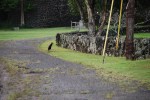
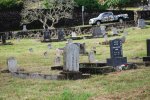
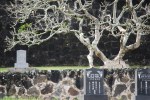
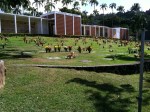
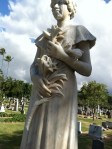
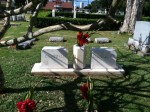
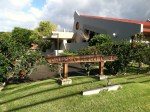
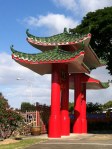
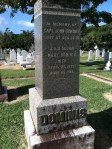
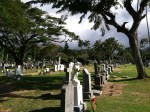
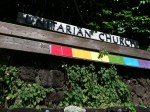
We walked down  Pali Hwy from Jack Lane towards the city. I’ve never walked that way before. I always go up. We ended up on Nuuanu Avenue. I felt like a total tourist, enjoying looking at the Asian Temples and local graveyards that line the road. I had to take pictures and share them here.

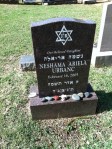
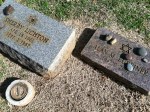
I thought they were all beautiful, but found the Oahu Cemetery quite special as I looked at grave markers that hold names from ancient and recent Hawaii history. I also enjoyed a brief visit to the small Jewish section in the back.

Thanks, Linda.

Follow the red brick wall

I have often written in praise of the “Hebrew School Carpool.” Around here we call it the Kapolei Carpool and it has become an established method of transportation for the small group of West Oahu Jewish families who are driving  the 21 miles back and forth, some times several times a week, to Temple Emanu-El in Honolulu for our kids to attend the Jewish School of Studies.

On Sunday mornings it’s pretty easy. We zip in and out of Honolulu in less than 30 minutes, with little interference. Traveling west on H-1 into Town on a weekday afternoon poses a challenge. Traffic congestion is random and can start as early as 3:00 pm. Often the pace makes a slow crawl until well after 6:00 pm.

But that’s not what this blog post is about. It has to do with the carpool, but in a much different way.

While forming the Kapolei Carpool was generally effortless, it took me much longer to find a carpool with neighborhood families whose children go to the same secular school that mine attend. I’ve been looking for a kindred group of drivers since my Teenager was in second grade and was not successful until recently.

Several of  Middle Schooler’s classmates live nearby and together we have established a nice carpool system.

We’ve told her to be at the ready to jump in the designated driver’s car as soon as it pulls up to the house. I don’t like to wait for other kids when I drive, so I don’t want other parents to wait for mine.

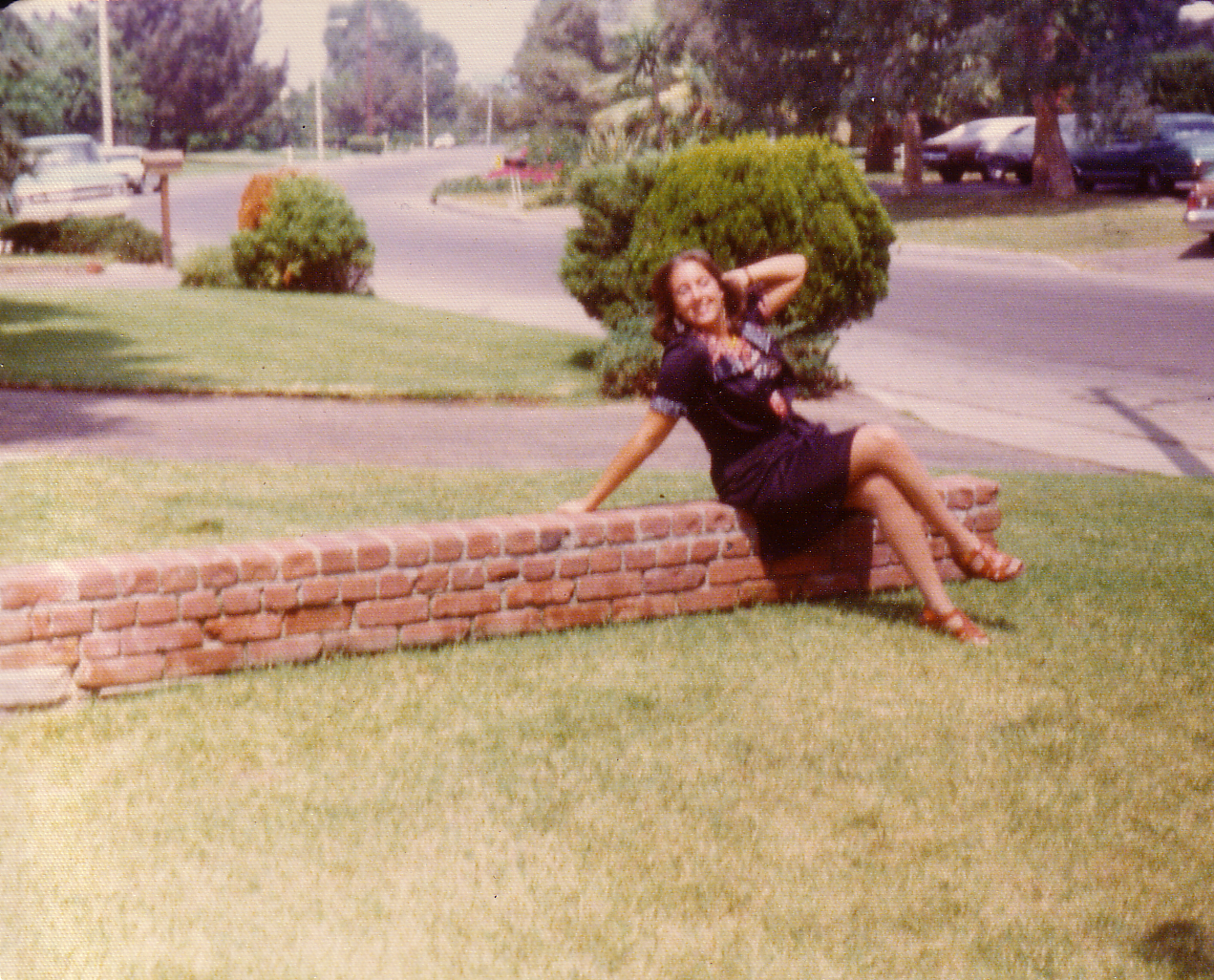
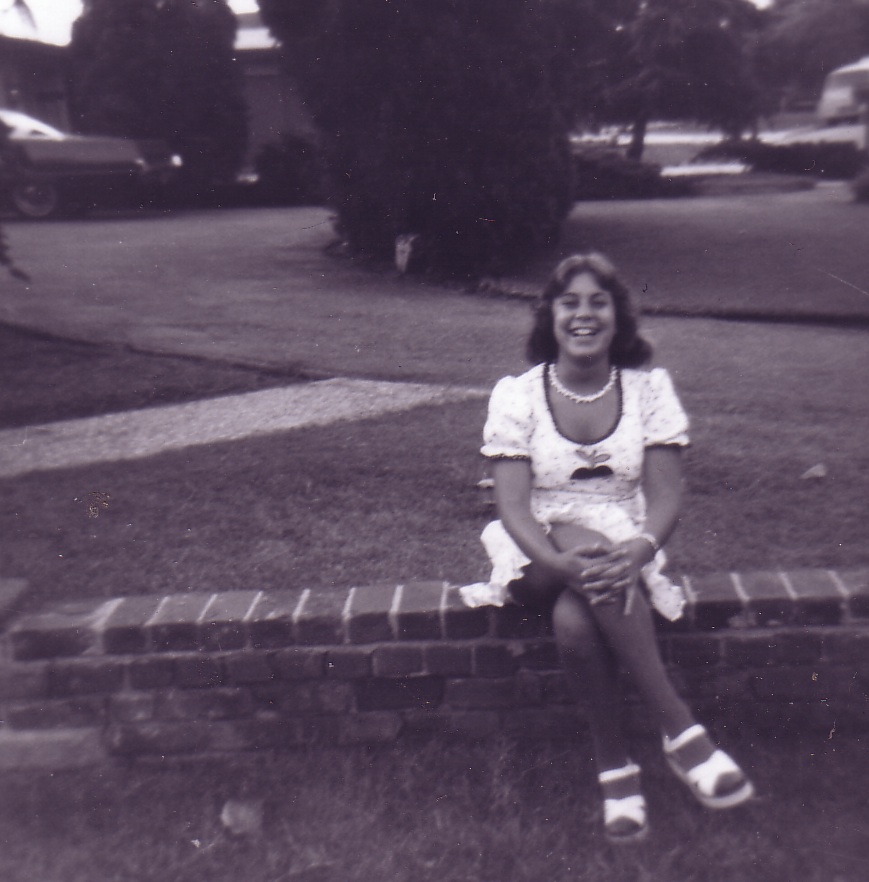
I told her about my Hebrew School days carpooling with the Rosmans, Shermans and Oxmans. My parents made us go outside to wait for them. We would sit on the red brick wall that divided our yard from that of our neighbors, the Armstrongs.

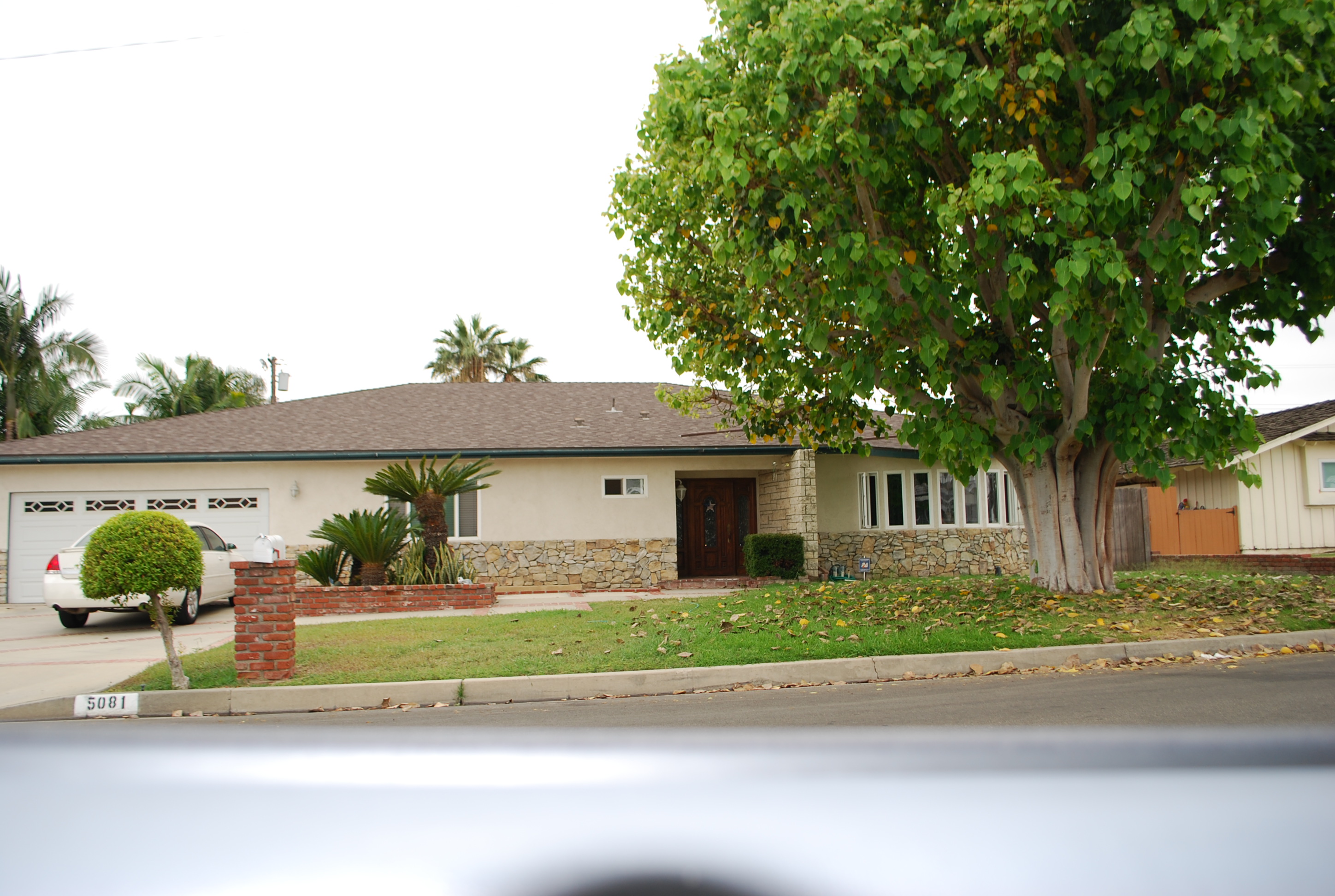
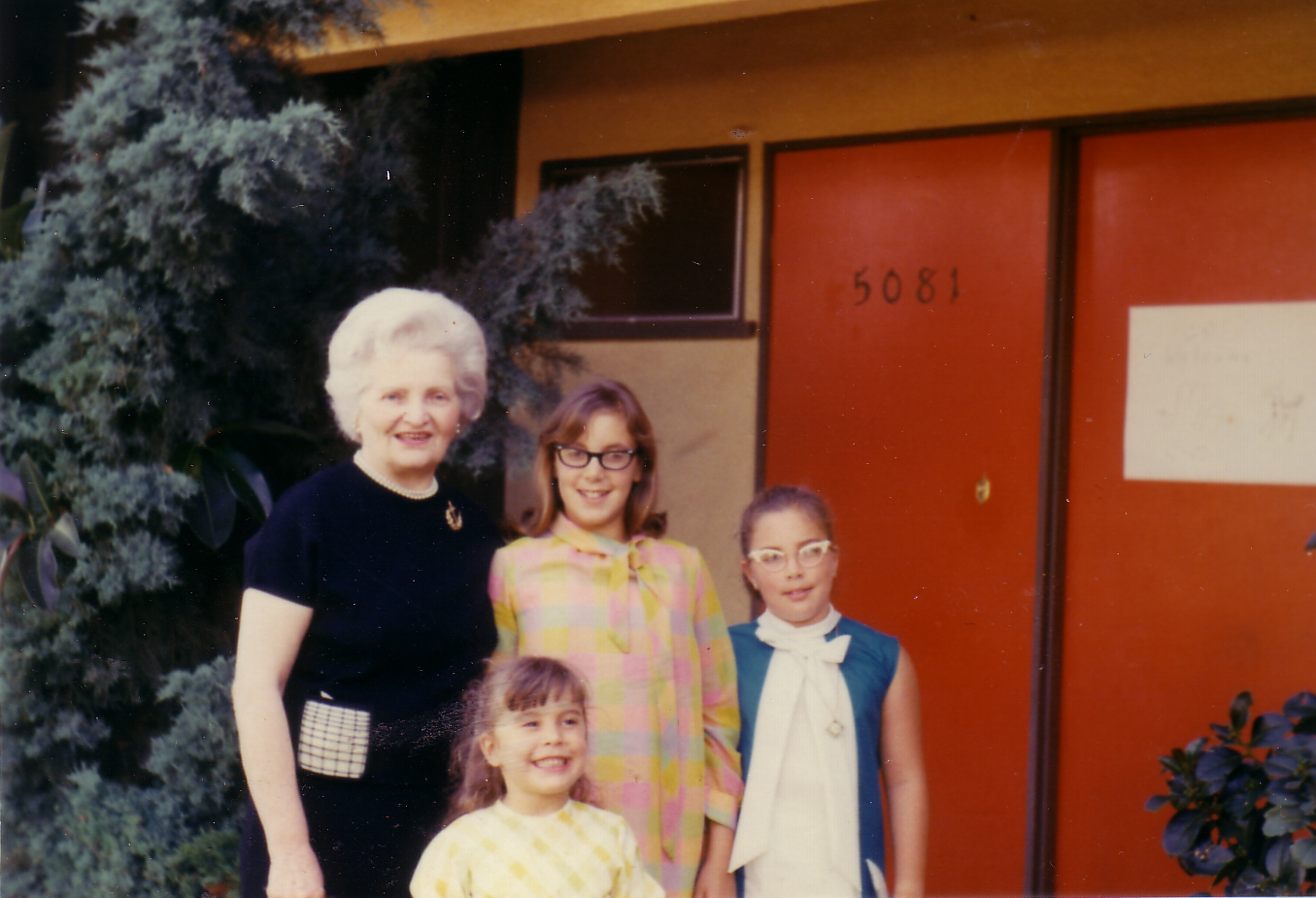
That’s what this blog post is about, the red brick wall in the front yard of the house where I lived for the first 18 years of my life at 5081 Somerset Street in Buena Park, California.

My sister on the red brick wall when she was a teenager.

I pose on the wall when I was a teenager.

One of the main attractions of our trip to Buena Park was a visit to that house.

The Gershun girls pose with our paternal grandmother in front of our house on Somerset Street.

We entered the neighborhood from Beach Boulevard and turned right on Los Coyotes Drive. It was called Bellehurst when we were kids, but now the entrance simply boasts the way to Los Coyotes Country Club.

Turning right on Country Club Drive, we wound our way to Somerset Street. We pointed out the few houses whose former occupants we remember. We got to the Morish’s house, 5 doors from ours and entered “The Zone”: the Morish’s, The Jensen’s, The Sheatz’s, please remind me if you remember the name of this family, the Armstrong’s and ours.

And there we were, facing the home of our childhood and the wonderful memories it holds. The front yard was the gathering place for croquet games, hide ‘n seek marathons and relay races of any kind.

The red brick wall was not only a bus stop for the local carpool. It was home base for kickball games and the launching point for piggy back rides and the wooden stilts that a family friend made for us.

We hesitated about parking in front of the house to get a good look. It felt kind of stalkerish. But I insisted. Why hide?

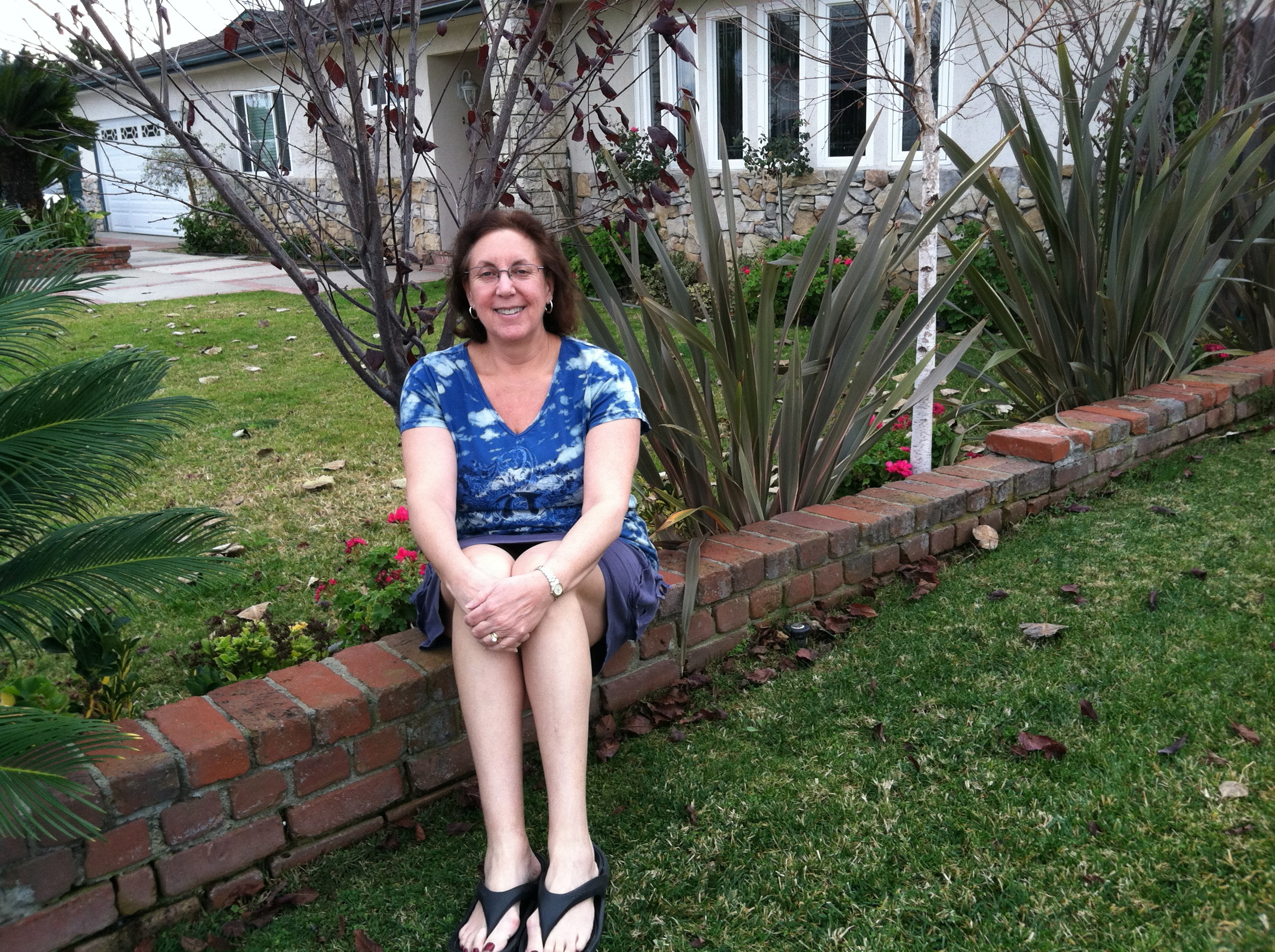
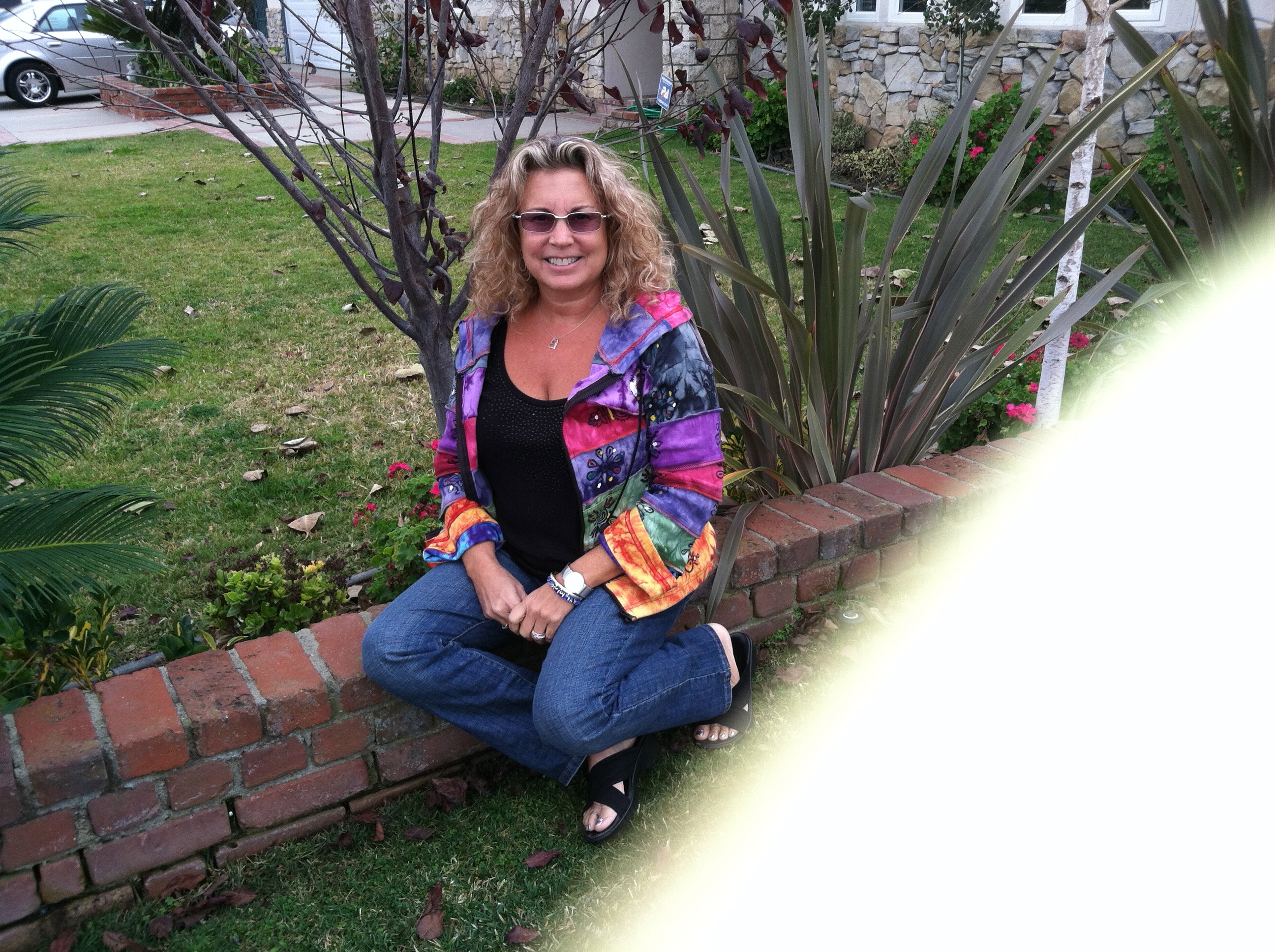
They have added plants in front of the wall where we used to play so we had to take pictures sitting on the wall from the Armstrong’s side.

My sister poses on the red brick wall in 2012.

I pose on the red brick wall in 2012.

By the time I was taking pictures of the tree, a lady came out the front door to ask us what we were doing! We explained who we are and she was very nice. She told us that mail addressed to the Gershun family was delivered to them a few times. We talked about the yard, the area and the schools. And then we were on our way.

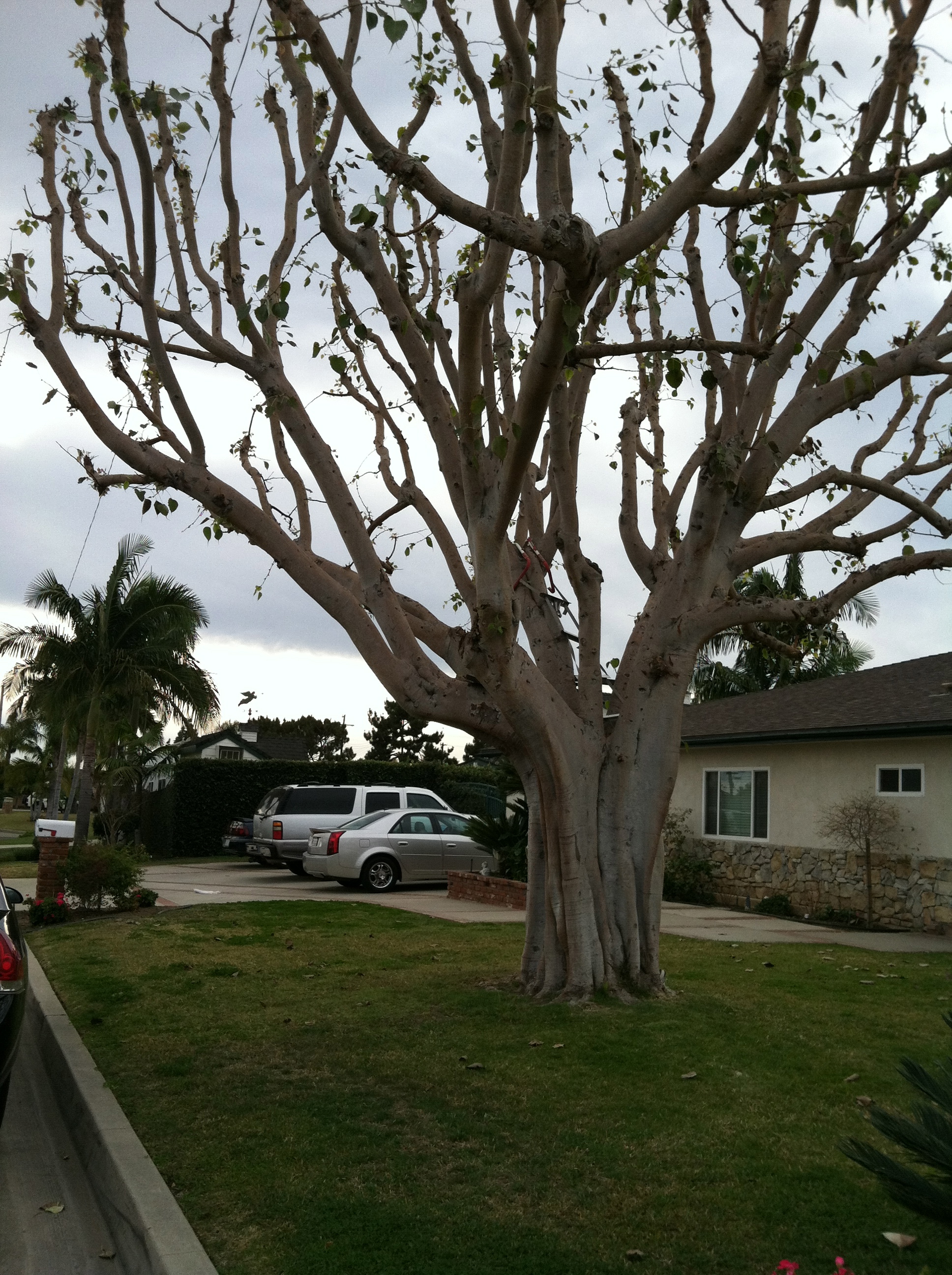
While not as prominent as the red brick wall, our front yard tree was ever-present in our childhood games. It was known to grow leaves and shed them at odd times of the year. It was my job to rake the leaves.

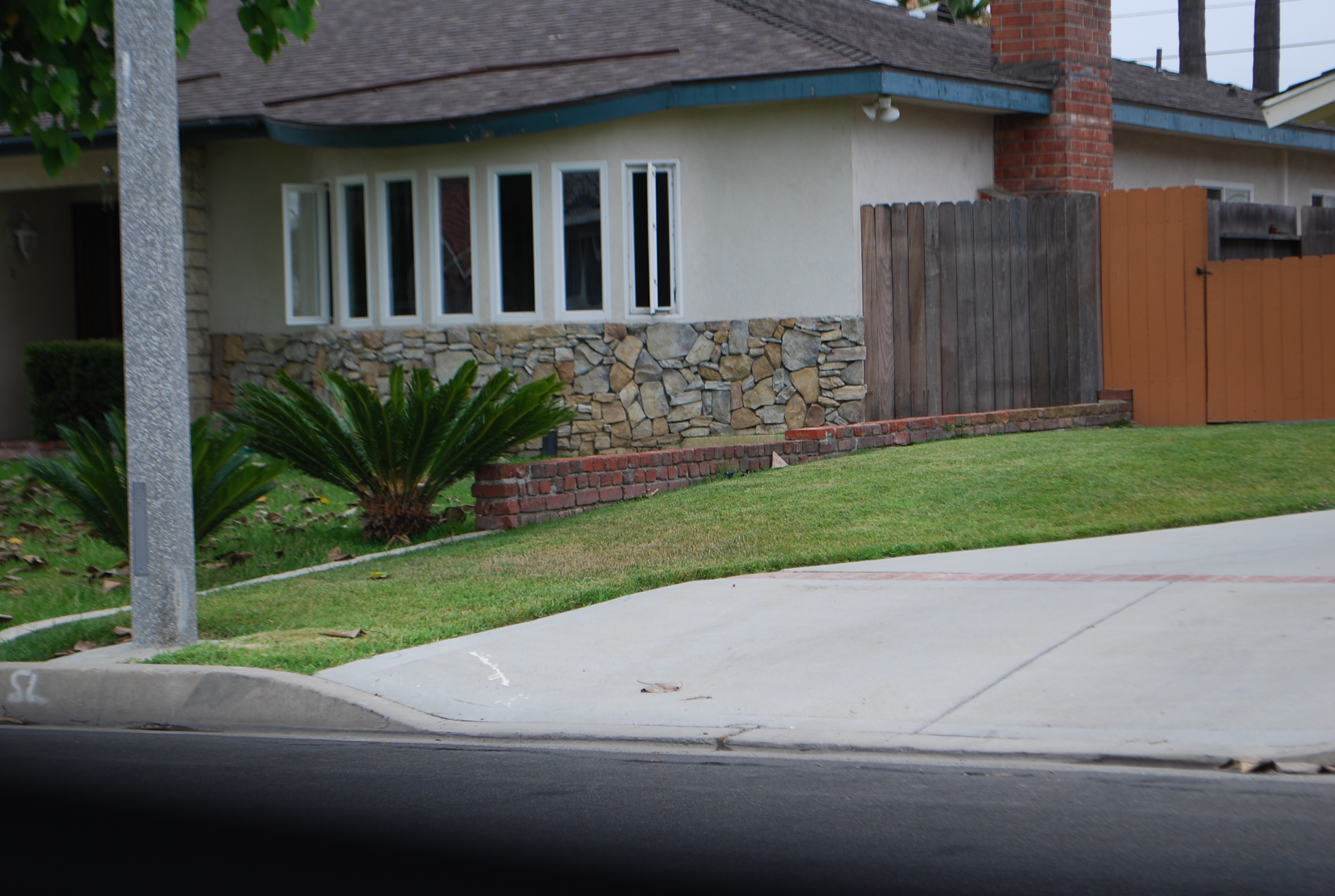
I visited the area in 2009 and took photos of the house and wall. It has changed, even since then.

The red brick wall in 2009.

The house and tree in 2009.

On that trip I reconnected with childhood friends.

On this trip I reconnected with my sister, our childhood and myself. Each stop on our itinerary prompted us to relate personal perspectives of experiences we shared, rejuvenating the wonderful memories of growing  up in our childhood home at 5081 Somerset and the surrounding Bellehurst neighborhood.

What does Knott’s Berry Farm have to do with being Jewish?

Not much generally, but it played a surprisingly strategic role in my formative years. That’s why it was a poignant stop on our recent visit through time to important landmarks of our hanabada days, growing up in Orange County, California.

My parents sent us to Religious school on Saturday mornings at Temple Beth Ohr, about a five minute drive from our house in Buena Park. Before I was of school age, I’d go with my father to drop off my older sisters and while they were learning the Shema or how to make Hamantashen, we would enjoy a few hours at nearby Knott’s Berry Farm.

In those days, Knott’s was not a major amusement park, but a small town attraction. We did not have to pay an entrance fee and there were only a few simple rides near the famous Ghost Town and Independence Hall.

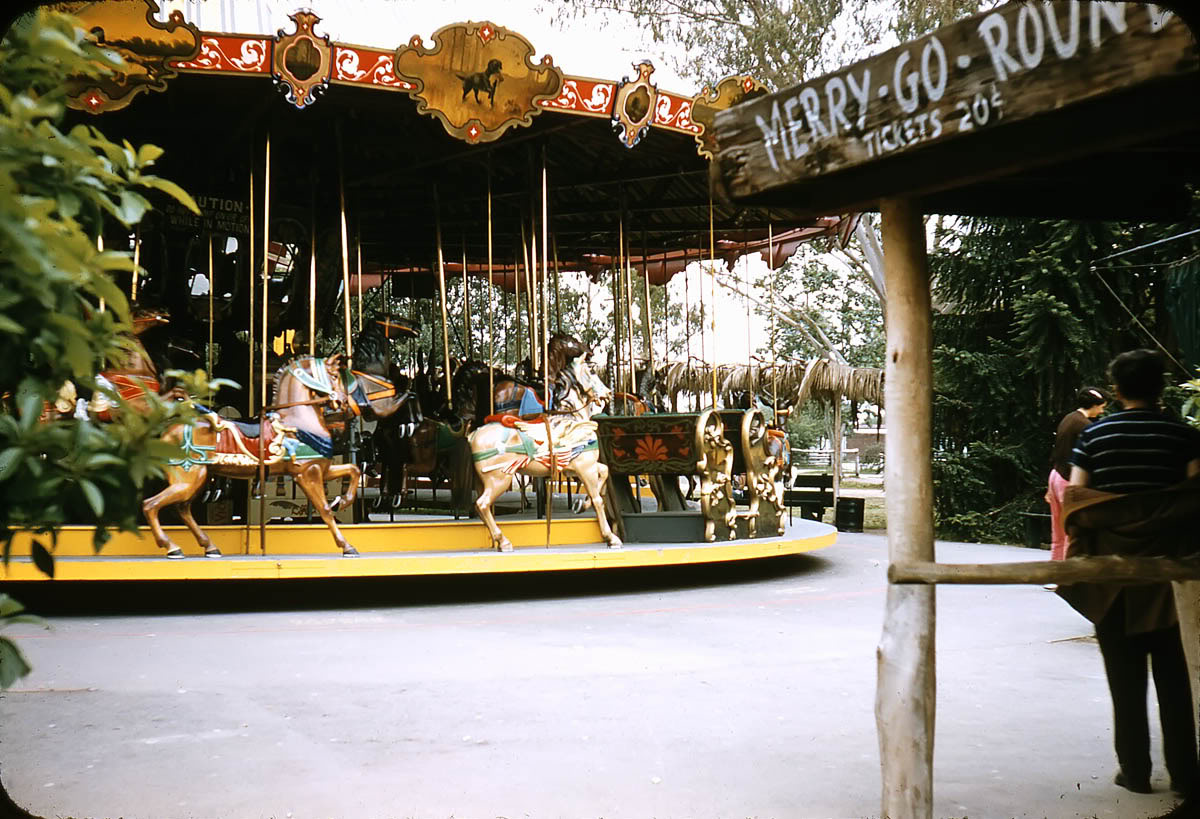
He would get some coffee and lift me up onto a colorful horse for a spin on the merry-go-round. Later I’d sit in a nearby electric car and he’d drop a coin in the slot. I would jiggle the steering wheel back and forth, pretending to drive while the car shook me back and forth enough to thrill my four-year-old sensibilities.

Every so often, we walked over to the other side to the semi life-sized cars that we could  really drive along a track (like the Autopia ride at Disneyland.) They aren’t there anymore. Soak City now occupies that spot. He pressed the gas pedal and let me steer as we zigged and zagged across the track. I’d squeal with delight. It always felt like an extra special morning when my dad and I would go for a ride in those cars.

A few hours later we would return to the Temple to pick up my sisters and head home, where I suspect that my mother was cherishing the last few precious moments of peace and quiet and a break from her three Jewish daughters that Religious school, my father and Knott’s Berry Farm offered on a weekly basis. Believe me, I can relate.

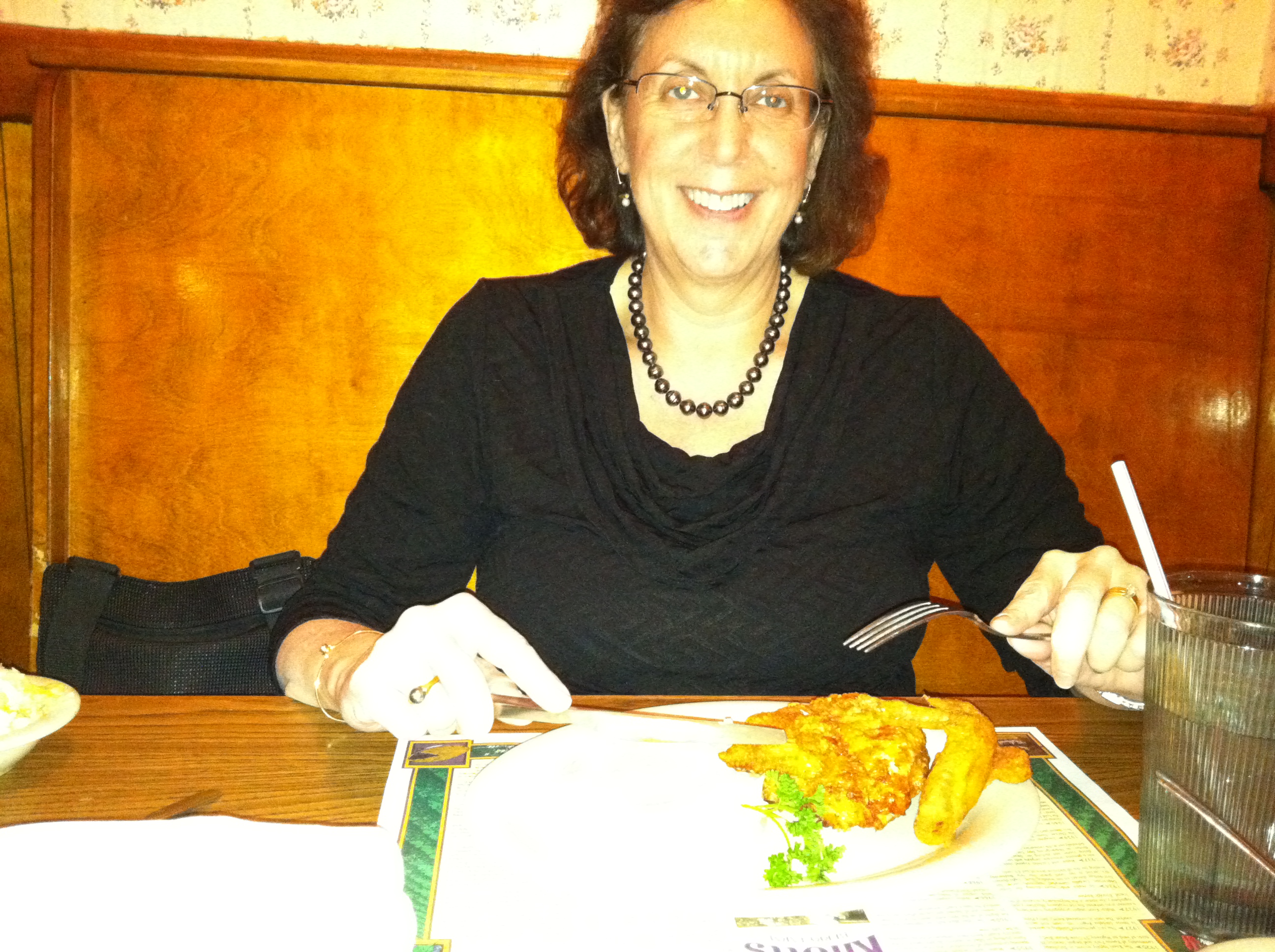
That’s why, when I was talking to the guy sitting next to me on the plane ride to LAX and he said that the first place he goes to eat when he gets to Southern California is Knott’s Berry Farms’ chicken dinner restaurant, I knew that we had to go there too. Besides the fact that I know my sister loves fried chicken, the park itself holds memories for all three of us Gershun girls.

We took the Beach Boulevard (Hwy 39) exit from the I 5 Freeway and headed south. My father’s law office used to be on Beach Blvd. and Orangethorpe Ave.. We had a fleeting  hope to catch a glimpse as we hurried towards our destination. But alas, it is now just an empty lot.

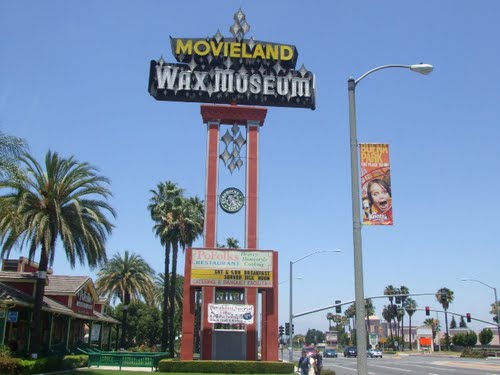
Luckily, some things never change. As we approached the intersection of Beach Blvd. and Knott Ave., and the berry farm itself, we laughed that the kitschy stretch of road doesn’t look much different.  I was surprised to learn later that the Movieland Wax Museum closed in 2005 and is now the Movieland Plaza. It was not apparent from our quick glance as we drove by.  I never went there or to the California Alligator Farm that closed in the 1980’s or Medieval Times that popped up after I left for college.

After dinner we walked over to Virginia’s Gift Shop, which evokes clear memories of our mom.

My mom LOVED to walk through Virginia’s Gift Shop for what felt like hours looking at every single item on display to her heart’s content. It did not matter that her tired, youngest daughter (that’s me) had not an iota of interest in the china and crystal and tchachkes that went on for display room after display room. She had spent the day letting us do what we wanted and now she would have a moment of her own pleasure.
I gotta say that, after all these years, I was still not very interested in the amazing array of gifts the shop has to offer, but it was a very nice memory.

On a side note: when I was in high school and our Temple youth group planned social activities, we did not go to Knott’s Berry Farm. We went to Disneyland and Magic Mountain, but not Knott’s. Walter Knott was a known member of the John Birch Society. In those days it was said that they were anti semitic. Thus, we did not patronize the establishment as a Jewish organization.

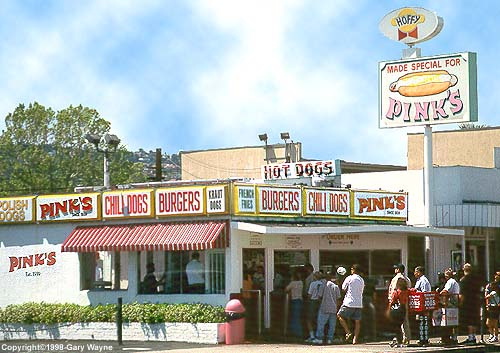
Another change surprised us and also gave us a new connection to Knott’s Berry Farm. They now have a Pink’s hot dog stand that replaces the same cafe where my father used to buy coffee on those Saturday mornings over 45 years ago.

Ironically, we are related to Pink’s on my mother’s side by marriage. My Great Aunt Shirley Freidman’s maiden name is Pink. She was married to my Great Uncle Eli  and  was the sister of Paul Pink who started the dogs in LA in 1939. They were both the greatest aunt and uncle you could imagine.
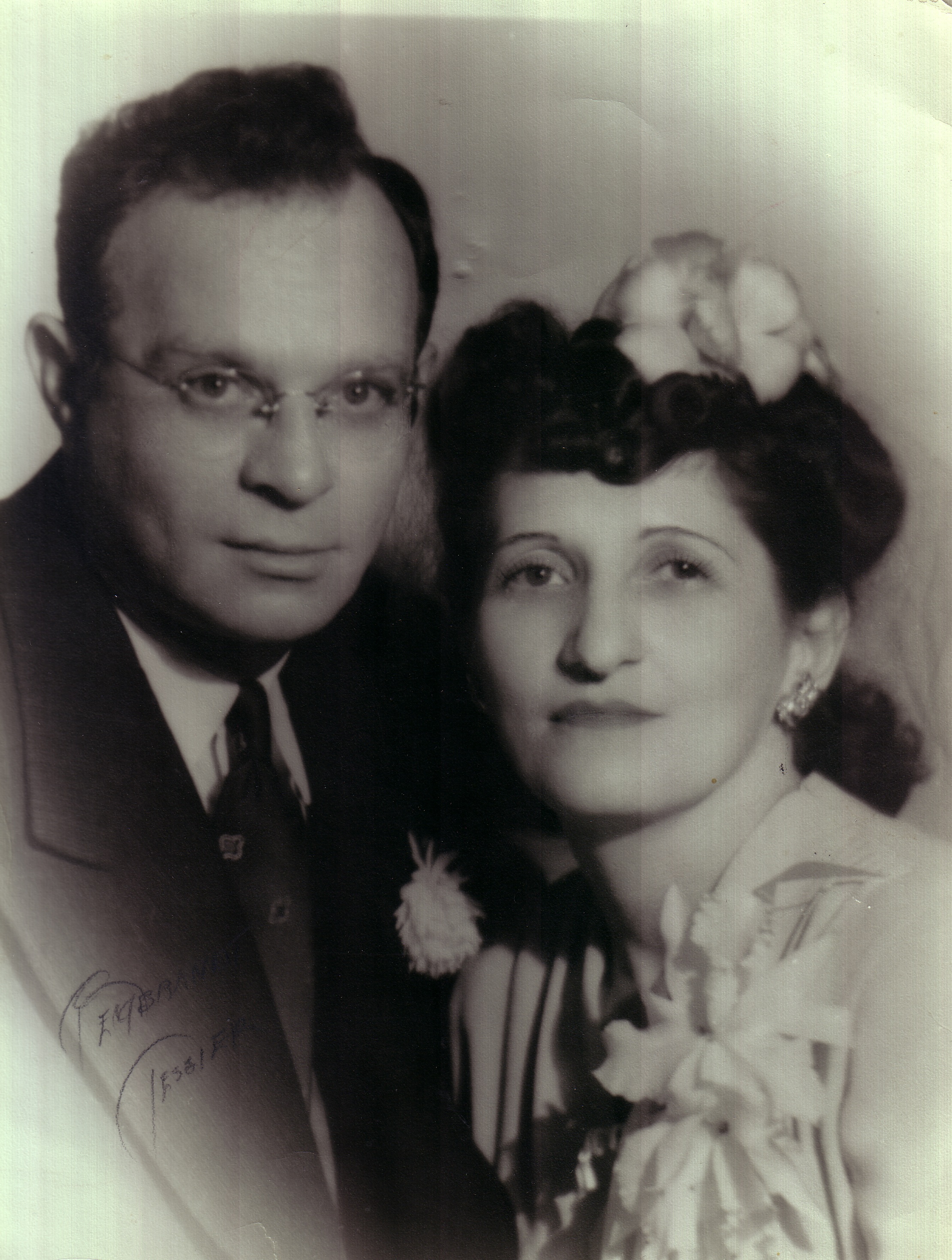
My Uncle Eli was my mother's great uncle, brother of her mother.

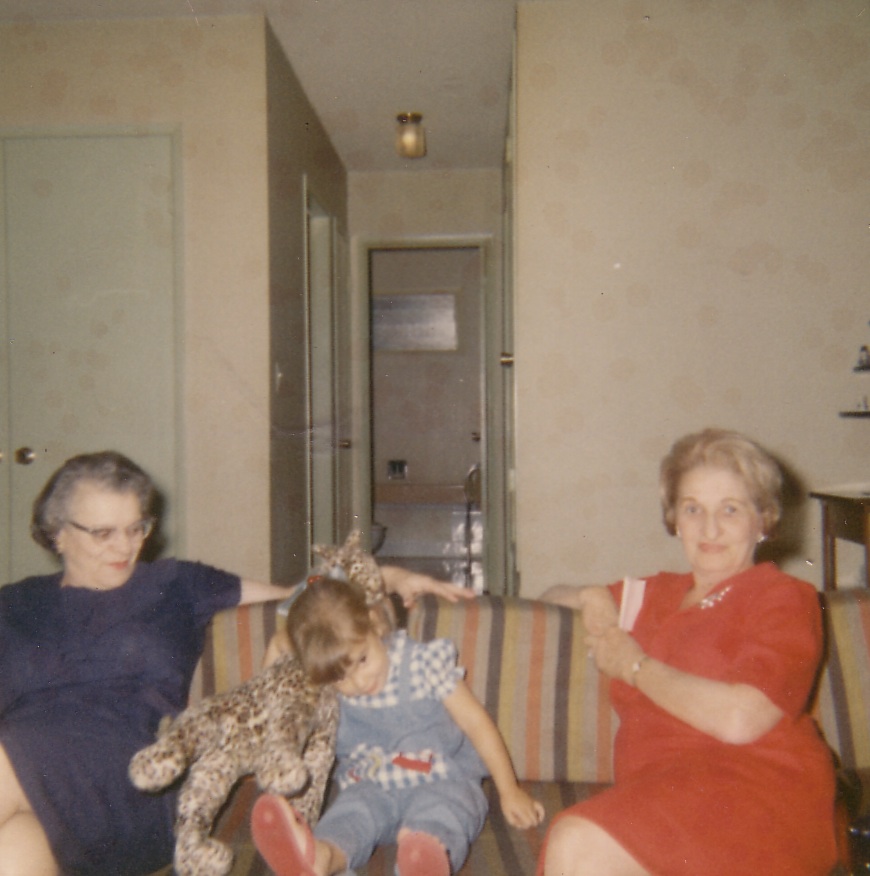
I am sitting with Aunt Shirley and my maternal grandmother Blanche Polsky, Uncle Eli's sister.

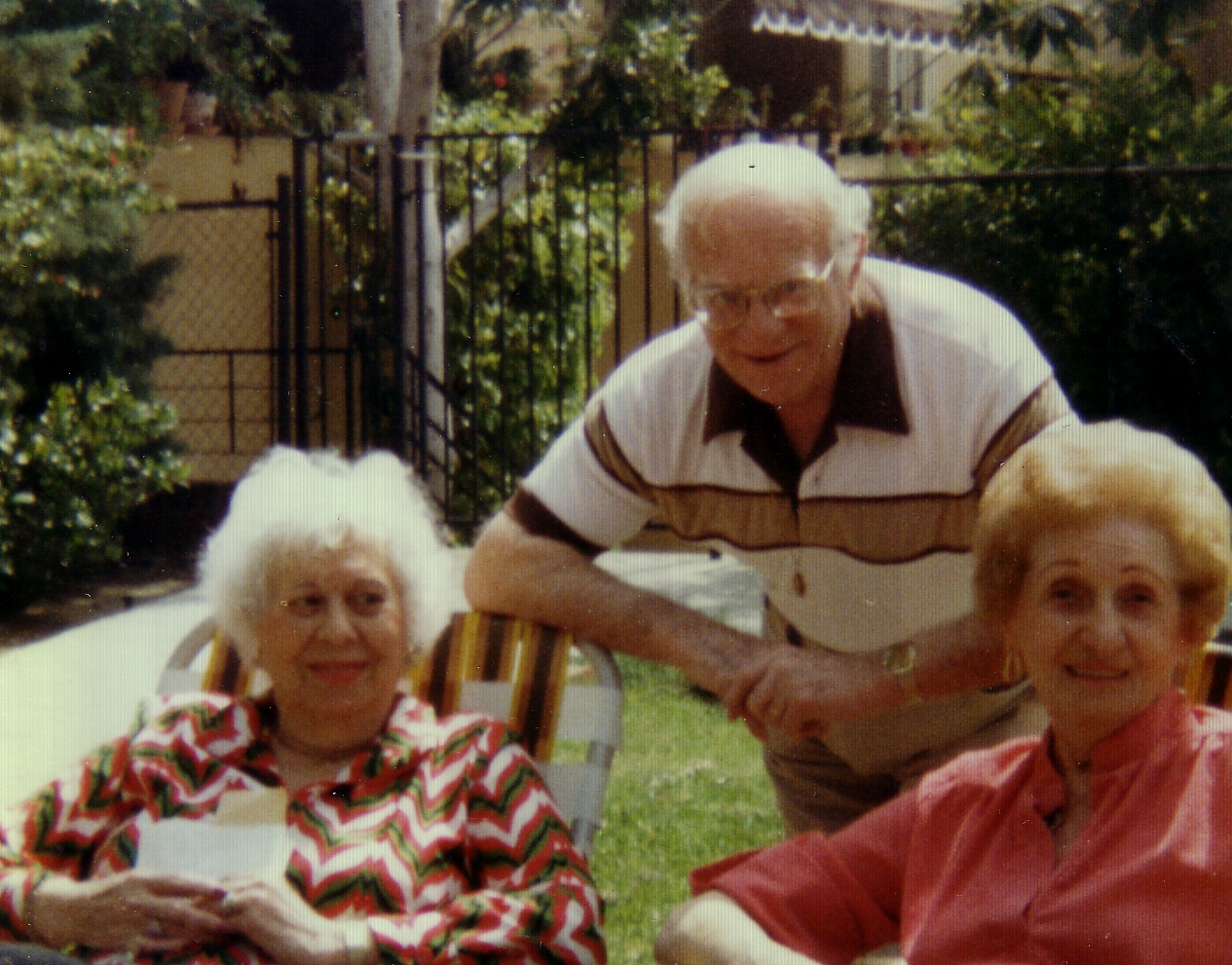
Aunt Shirley (right) and my Uncle Eli on his 80th birthday sitting with his sister, my Great Aunt Tee (Frank)

I remember driving in to L.A. to visit them and on several occasions, stopping at Pink’s for a dog. There were also many late night visits when I was in college, but that’s a different story.

That’s the end of my story about Knott’s. I have to thank my seatmate on Hawaiian Airlines flight 10 from HNL to LAX on January 11, 2012. If he had not mentioned his affinity for a chicken dinner at Mrs. Knott’s Chicken Dinner Restaurant, I would not have thought to add it to our itinerary. We would have missed a plethora of wonderful memories and a chance to write this blog post.

I sure hope that Walter Knott wasn’t really an anti Semite and that he is not rolling over in his grave about the fact that Knott’s Berry Farm plays a supporting role in my memories of growing up Jewish in Buena Park, California.

Previous Older Entries Next Newer Entries